On this page
Clean Beauty, Dirty Secrets: The Ultimate Guide to Cosmetic Safety and Hygiene
Quick answer: “Clean beauty” has no legal definition, so the label alone says little about safety. The bigger hidden risk is bacteria growing in old makeup and dirty tools — replace products by their expiry dates, wash brushes often and never share eye or lip products.
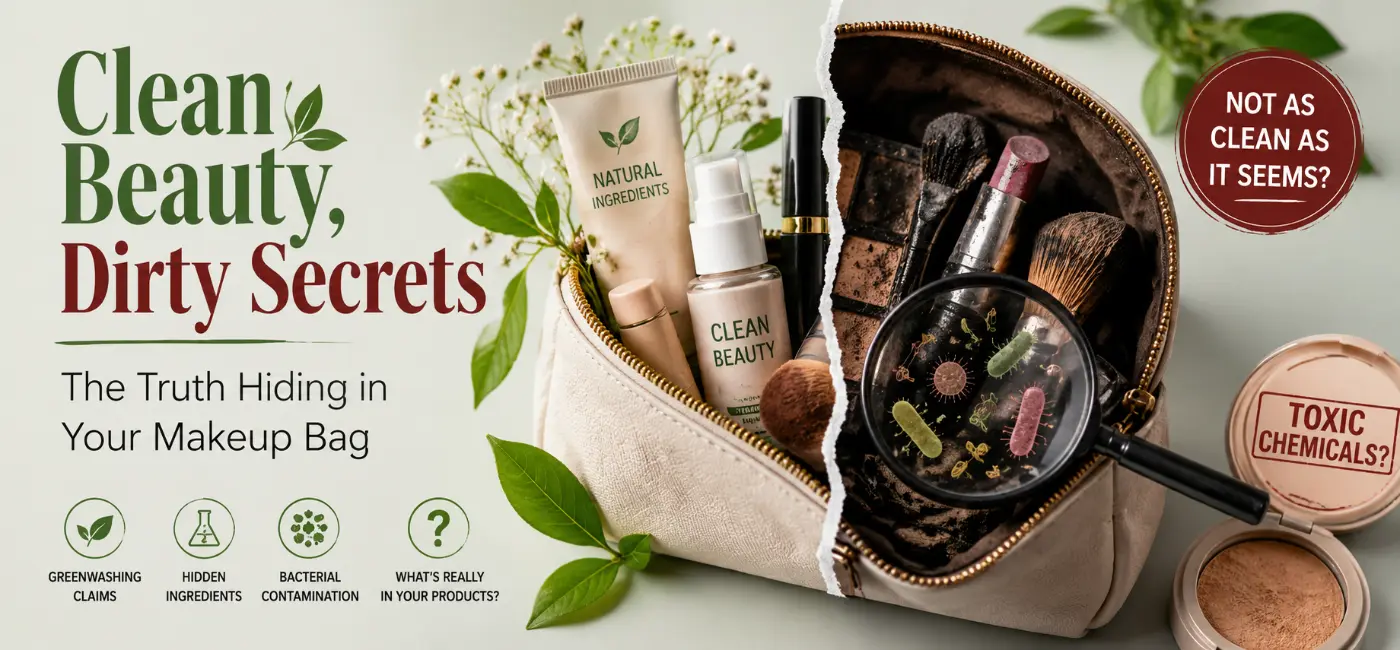
Every single morning, millions of people apply a meticulously curated routine of primers, foundations, lipsticks, and serums to their skin. We choose these products to feel confident, radiant, and well-cared for. But behind the beautifully branded packaging lies an unsettling reality. Maybe it’s time to swap heavy products for a lightweight Honey Translucent Foundation to let your skin breathe. Cosmetic safety is deeply fragmented into two critical, hidden vectors: toxicological ingredients introduced by manufacturing greenwashing, and pathogenic micro-organisms thriving right inside your personal makeup bag due to poor hygiene habits.
If you want to protect your skin, your hormonal health, and your immune system, it is time to unpack the real “dirty secrets” of the beauty industry and transform awareness into objective action. Implementing a healthy glowing skin routine will help restore clarity and balance to your complexion.
The Chemistry Illusion: Deconstructing the "Clean Beauty" Myth
The global beauty marketplace is currently flooded with terms like “clean,” “pure,” “natural,” “non-toxic,” and “green.” Yet, from a regulatory standpoint, these terms are almost completely meaningless.
Unlike the pharmaceutical industry, the cosmetic sector suffers from minimal systemic oversight. In the United States, for example, the FDA does not legally define “clean beauty” leaving individual brands free to invent their own benchmarks. This regulatory blind spot has given rise to rampant greenwashing—the practice of marketing a product as eco-friendly or health-conscious when its formula contains questionable chemical synthetic compounds. If you want to achieve the coveted, minimalist aesthetic safely, understanding how to recreate the viral clean girl makeup glow using vetted ingredients is highly beneficial.
The Real "Dirty List": Ingredients to Screen
Authentic clean beauty awareness requires reading labels, not marketing copy. When auditing your cosmetics, look out for these scientifically flagged compounds:
Parabens (Methyl-, Ethyl-, Propyl-, Butyl-): Extensively used as chemical preservatives, these compounds act as endocrine disruptors by mimicking estrogen in the human body, potentially throwing off hormonal balance.
Phthalates (DEP, DBP, DEHP): Often hidden under the generic ingredient term “Fragrance” or “Parfum,” phthalates prolong the scent and flexibility of plastics and cosmetics. They have been strongly linked to reproductive toxicity and developmental disorders.
Formaldehyde Releasers (DMDM Hydantoin, Imidazolidinyl Urea): Used to prevent microbial growth, these compounds slowly shed trace amounts of formaldehyde-a known human carcinogen and severe skin sensitizer-over time.
Heavy Metals (Lead, Arsenic, Cadmium): While rarely added intentionally, these elements frequently enter color cosmetics as contaminants from low-grade, poorly processed mineral pigments (like unregulated micas or iron oxides). To safely conceal any resulting discoloration, consider switching to a clean Concealer – Fair to cover blemishes without aggravating your pores.
The Microbiological Hazard: What’s Actually Growing in Your Makeup Bag?
While structural clean beauty awareness focuses intensely on the chemical formulas bought at the store, an equally dangerous hazard develops inside the home. Your makeup bag is an absolute haven for microbial growth. It is dark, warm, frequently exposed to moisture, and packed with organic substrates (oils, waxes, proteins) that feed pathogens. Ignoring these hidden risks is one of the most critical – skincare mistakes ruining your glow over time.
Peer-reviewed microbiological studies on consumer cosmetics consistently reveal shocking results. Swabs taken from used makeup sponges, liquid foundations, and mascara wands regularly identify highly pathogenic micro-organisms:
🦠 Staphylococcus aureus
Skin & Soft Tissue Risk
🧫 Escherichia coli (E. coli)
Fecal Contamination Risk
⚠️ Pseudomonas aeruginosa
Severe Ophthalmic Risk
Staphylococcus aureus: A bacterium that easily transfers from unwashed fingers into cream-based blushes and foundations, leading to painful acne breakouts, impetigo, or dangerous staph infections.
Escherichia coli (E. coli): Traced directly to poor bathroom hygiene or storing makeup bags near toilets, this fecal bacterium causes severe skin irritation and gastrointestinal cross-contamination risks.
Pseudomonas aeruginosa: Frequently cultivated in old, damp mascara tubes and liquid eyeliners. If introduced to a micro-scratch on the cornea, it can result in corneal ulcers and permanent vision loss.
How Clean Is Your Makeup Bag? A Practical Self-Audit Checklist
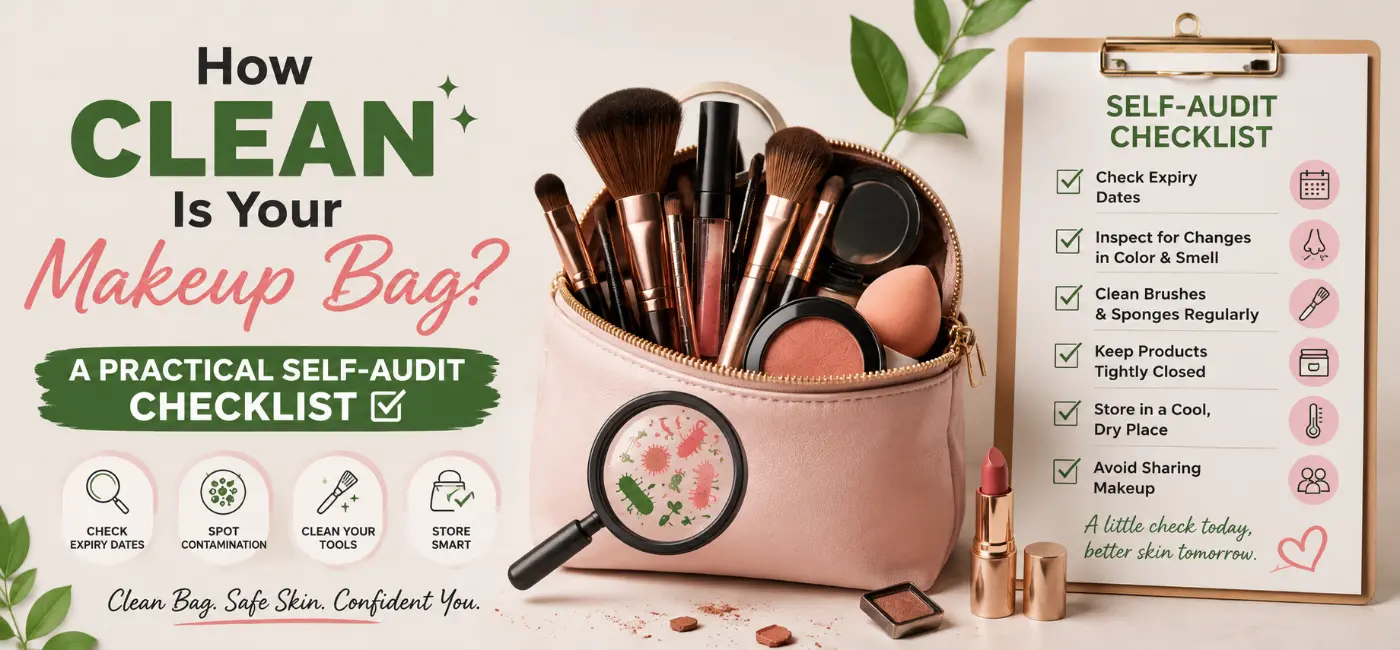
To effectively gauge your current risk profile, walk through this quick diagnostic checklist. If you answer “Yes” to two or more of these questions, your beauty ecosystem requires immediate intervention:
[ ] Do you apply makeup using your fingers without washing your hands immediately beforehand? [ ] Have you kept a liquid foundation or mascara open for longer than six months? [ ] Do you store your main makeup kit or everyday beauty tools directly on a bathroom counter near the toilet? [ ] Do you wait longer than a month to wash your makeup brushes or beauty blending sponges? [ ] Do you share eye or lip cosmetics with close friends or family members?
Learning how to navigate these challenges will drastically transform your skin in 2026
The Critical Timeline: Deciphering the PAO Symbol
Every consumer must learn to recognize and respect the PAO (Period After Opening) Symbol. Displayed on the back or bottom of cosmetic containers, this icon looks like a tiny open jar accompanied by a number followed by the letter “M” (e.g., 6M, 12M, 24M). This denotes exactly how many months the product remains safe and stable after the protective seal is broken.
Standard Cosmetic Expiration Matrix
Because natural or “clean” formulas frequently omit heavy synthetic stabilizers and parabens, their active shelf-lives are drastically shorter than conventional cosmetics. Use this reference table to evaluate your current inventory:
| Product Category | Average Conventional Shelf Life | Clean / Organic Shelf Life | Primary Contamination Risk |
|---|---|---|---|
| Mascara & Liquid Eyeliner | 3–6 Months | 2–3 Months | High (Ophthalmic Infections) |
| Liquid Foundation & Concealer | 12 Months | 6–8 Months | Moderate (Acne & Staph) |
| Powder Products (Shadows, Blush) | 24 Months | 12–18 Months | Low (Surface Mold / Bacterial Film) |
| Lipstick & Lip Glosses | 12–18 Months | 6–12 Months | Moderate (Ingested Pathogens / Herpes) |
| Beauty Blending Sponges | Replace Every 3 Months | Replace Every 2–3 Months | Critical (Deep-Tissue Mold / Fungi) |
Masterclass Protocol for Cosmetic Hygiene & Safety
Eliminating the invisible threats in your makeup routine requires adhering to a rigorous, non-negotiable hygiene framework:
Rule 1: Sterilize Weekly, Clean Daily
Do not rely on water alone. Brushes used for liquid formulas should be deeply cleansed every single week using a targeted, antibacterial brush soap. For quick clarification between applications, implement an alcohol-based, quick-drying cosmetic sanitizing spray to neutralize surface pathogens instantly on both your tools and pressed powder pans.
Rule 2: Abolish the "Bathroom Storage" Habit
Bathrooms are humid, high-moisture high-heat environments. Every time a toilet flushes, micro-aerosols disperse into the air. Maintaining an organized environment is just as crucial as the general essential home care tips for a safe healthy life you practice daily. Store your cosmetic kits in a cool, dry bedroom drawer or a dedicated vanity case far away from fluctuating moisture zones.
Rule 3: Wash Blenders and Let Them Dry in Open Air
Enclosing a damp makeup sponge inside a dark, zippered cosmetic bag is a recipe for deep-tissue black mold. Always wash your sponges immediately after use, squeezing out excess moisture, and let them air-dry completely in a well-ventilated, open area.
Rule 4: Never Add Water to Revive Dried Products
When a mascara or gel liner begins drying out, adding tap water or saliva introduces massive colonies of foreign bacteria directly into a closed, preservative-compromised container. If it is dry, it has expired-throw it away.
Key Takeaways
Greenwashing is Real: Regulatory agencies do not formally define “clean beauty,” placing the burden of ingredient verification directly on the consumer.
The Microbiological Threat: Unwashed beauty tools and expired makeup regularly harbor dangerous pathogens like E. coli and Staphylococcus, causing persistent breakouts and physical infections.
Respect the PAO: Clean and organic beauty formulas lack synthetic parabens, meaning they spoil and breed bacteria significantly faster than conventional options.
Location Matters: Storing makeup kits in humid bathrooms drastically accelerated bacterial and mold proliferation.
Frequently Asked Questions
Q1: Is "Clean Beauty" really safer, or is it just a clever marketing trap?
The Truth: Clean beauty drops harsh chemicals, which is awesome for your skin! But here’s the catch: without strong synthetic preservatives, these natural bottles become an open invitation for bacteria. They are cleaner, yes, but they expire twice as fast!
Q2: Why is your favorite Mascara secretly a ticking bacterial time bomb?
The Truth: Every pump of the wand pushes air and micro-organisms into a dark, damp tube. Conventional mascara taps out at 6 months, but a clean/organic mascara becomes risky after just 2 to 3 months. Using it past its prime is a direct invite to painful eye infections.
Q3: What’s the worst that could happen if you apply expired makeup?
The Truth: It’s way worse than just a patchy look. Expired products can harbor dangerous bugs like Staphylococcus aureus. We are talking angry acne breakouts, painful skin rashes, swelling, and in extreme cases, severe eye damage.
Q4: Is your beauty blending sponge secretly growing mold inside?
The Truth: High chance it is! Even if the outside looks pristine, the damp core of a blending sponge traps moisture, old foundation, and dead skin cells—making it a perfect home for fungi and deep-tissue mold. The golden rule? Toss it out every 2 to 3 months!
Q5: How do you "sniff out" makeup that has officially gone bad?
The Truth: Trust your senses! If your liquid foundation separates or smells like stale vinegar, or if your powder palette gets a hard, shiny film on top—bacteria has officially taken over. When in doubt, throw it out!
Q6: What is the absolute #1 rule to keep your makeup bag bacteria-free?
The Truth: Stop storing your makeup in a hot, steamy bathroom—humidity accelerates bacterial growth like crazy! Keep it in a cool, dry place, wash your tools weekly, and never, ever share your lip or eye products with anyone.
Strategic Action & Next Steps
True cosmetic empowerment requires marrying a conscious selection of non-toxic ingredients with immaculate physical maintenance. Tonight, take ten minutes to pull your makeup collection out onto a clean towel. Audit every item against the PAO symbol, inspect your sponges for hidden dark spots, and commit to deep-cleaning your brushes this weekend.
If you want to replace expired or contaminated lip products with items that offer both color and purity, click here to shop our vanilla translucent foundation or lip vitality collection for a fresh, toxin-free start. Your skin, health, and immune system will thank you.
Have you audited your makeup bag recently? Leave a comment below sharing the oldest product you uncovered during your inventory check, and don’t forget to subscribe for our weekly, science-backed skin wellness breakdowns!

Ahetesam Sabugar
Ahetesam Sabugar is the founder of Vigrovia. He researches and writes guides on skincare, supplements, fitness recovery and home-gym gear. He isn't a doctor, so every article is built from published studies, ingredient labels and trusted sources like the NIH and Cleveland Clinic, and is updated when new research comes out.
More articles by Ahetesam →