
On this page
12 Skincare Routine Steps in the Right Order (2026)
Quick answer: Apply skincare from thinnest to thickest: cleanser, toner, serum, eye cream, spot treatment and moisturizer, with sunscreen as the last step in the morning and a retinoid or richer night cream in the evening. The right order helps each product absorb and work.
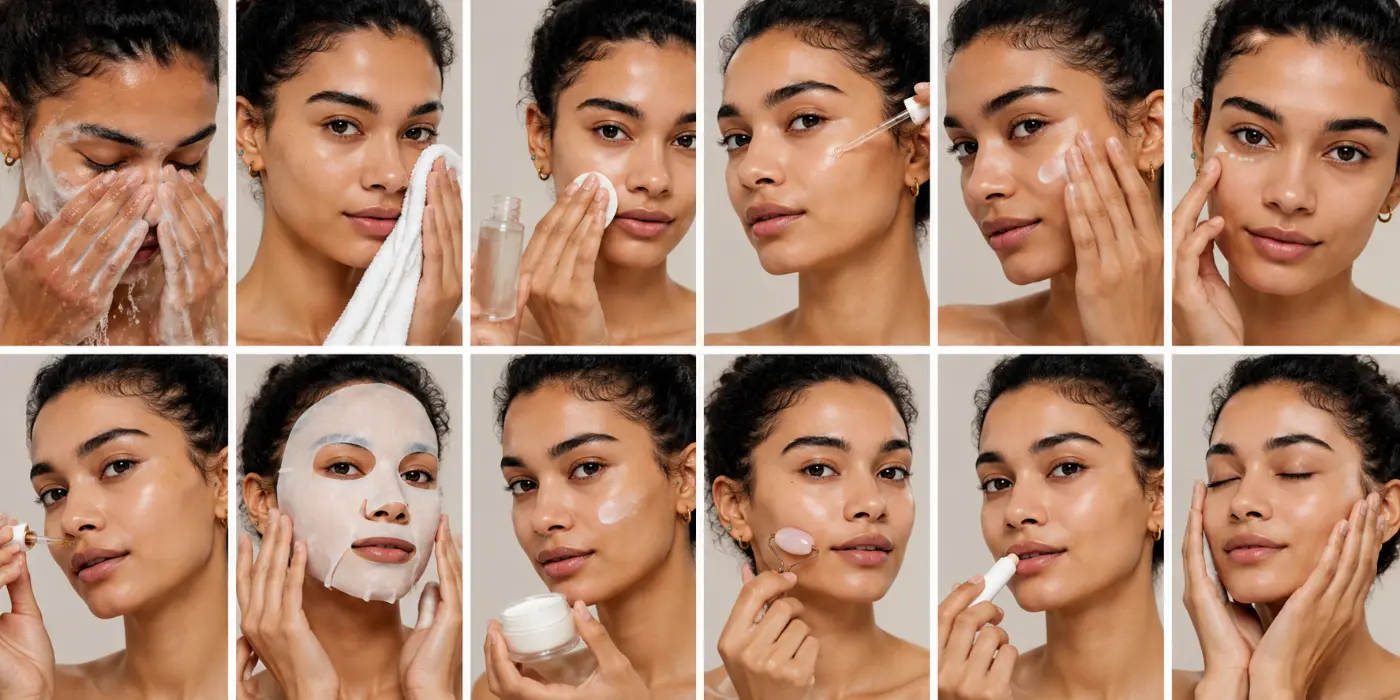
The correct order of Skincare Routine Steps, from thinnest to thickest, consists of the cleanser, toner, serum, eye cream, spot treatment, and moisturizer, with the sunscreen added in the morning and a richer night cream or retinoid in the evenings. Following the proper order of applying skincare products allows them to penetrate the skin better, preventing active ingredients from being wasted, neutralized, or causing irritation to the skin.
The reason your skincare products might not be working as efficiently as you would like them to is because of the incorrect layering order. Layering products incorrectly reduces their effectiveness because of the wrong order of absorption which makes the skin incompatible to the active substances of the skincare products. Here is a guide of the 12 necessary steps and the order in which they are supposed to be applied by dermatologists, so your skincare set becomes a full-body ritual and fills the bottles to the brim. The eighth step is the one that is generally rushed, making it impossible for the skin to absorb the products fully.
Why does the order of your skincare routine matter?
Order matters because skincare absorbs from thinnest to thickest – apply a heavy cream before a watery serum and the serum can’t get through. The right sequence lets each active ingredient reach your skin instead of getting blocked by the layer above it.
Get the order wrong and three things happen:
- Actives can’t absorb – a thick moisturizer or oil forms a barrier that a serum applied on top never penetrates.
- Ingredients cancel out – some pairings (like a strong exfoliant with retinol) neutralize or over-irritate when layered wrong.
- You waste money – expensive products sit on the surface and rinse away instead of working.
Who actually needs a full skincare routine?
Almost everyone benefits from a basic routine, but you don’t need all 12 steps. If you’re just starting out, cleanser, moisturizer, and sunscreen are enough – the other steps are add-ons for specific concerns. Ready to build yours? Explore our skincare products to match each step.
Here’s who each level is for:
- Beginners / low effort: cleanser, moisturizer, sunscreen (3 steps).
- Targeting a concern (acne, dark spots, aging): add a serum, exfoliant, or retinoid.
- Dry or mature skin: add eye cream, face oil, and a night cream to seal in moisture.
- Skincare enthusiasts: the full 12-step routine below, split between morning and night.
1. Cleanser - always start here
Cleansing is the non-negotiable first step that resets your skin for everything after it.
A clean base removes overnight oil, sweat, dead cells, and daytime pollution. Skip it and the products that follow just sit on top of grime instead of sinking in. In the evening, use a double cleanse (an oil-based cleanser followed by a gentle water-based one) if you wear sunscreen or makeup.
- Tip: Use lukewarm water – hot water strips the skin barrier and leaves it tight and dry.
- Pick a creamy cleanser for dry skin and a gel or foaming one for oily skin.
2. Toner or Essence - prep and hydrate
A toner balances your skin’s pH and preps it to absorb the next layers.
Modern toners aren’t the harsh, alcohol-heavy astringents of the past. Today’s hydrating toners and essences add a first thin layer of moisture and help serums penetrate better. Apply with clean hands or a cotton pad while skin is still slightly damp.
- Tip: Look for ingredients like hyaluronic acid, glycerin, or niacinamide, and skip alcohol-based toners if your skin runs dry or sensitive.
3. Exfoliant - 2 to 3 times a week (not daily)
Chemical exfoliants (AHAs and BHAs) – two of the skincare ingredients – clear dead skin and unclog pores for a smoother, brighter surface.
This is a treatment step, not a daily one. Use it a few nights a week after toner. Over-exfoliating is one of the most common skincare mistakes and leads to redness, stinging, and a damaged barrier.
- Use a BHA (salicylic acid) for oily, acne-prone skin.
- Use an AHA (glycolic or lactic acid) for dullness and texture.
- Tip: Never pair a strong exfoliant with retinol on the same night — it’s a fast track to irritation.
4. Serum - target your main concern
Serums deliver concentrated active ingredients straight to the concern you care about most.
This is where you personalize your routine. For dry skin, a hydrating serum works best. Serums are lightweight and absorb quickly, so they go on before heavier creams. Apply the thinnest, most water-like serum first if you use more than one.
- Vitamin C in the morning for brightening and antioxidant protection.
- Hyaluronic acid for deep hydration on damp skin.
- Niacinamide for oil control, pores, and redness.
5. Eye Cream - a gentle touch around the eyes
Eye cream targets the thin, delicate skin around your eyes where fine lines and puffiness show first.
Apply a small amount and tap it in gently with your ring finger, which uses the least pressure. Using it before heavier moisturizer helps it absorb without being pushed around.
- Tip: Store eye cream in the fridge – the cool temperature helps de-puff in the morning.
6. Spot Treatment - for blemishes only
Spot treatments are applied only where you need them, directly onto active blemishes.
Ingredients like benzoyl peroxide or salicylic acid are strong, so they go on clean, targeted areas before moisturizer seals everything in. Applying moisturizer first would dilute the treatment.
- Tip: Dab a tiny amount only on the spot – spreading it wider dries out healthy skin around the blemish.
7. Moisturizer - lock in every layer
Moisturizer seals in the serums beneath it and reinforces your skin barrier.
Every skin type needs it, including oily skin – skipping moisturizer can actually trigger more oil production. Use a lightweight gel-cream for oily skin and a richer cream for dry skin.
- Tip: Apply to slightly damp skin to trap extra hydration.
- Look for ceramides and hyaluronic acid to strengthen the barrier.
8. Sunscreen - the last morning step (SPF 30+)
Sunscreen is the single most important anti-aging step, and it always comes last in your morning routine.
This is the step most people apply too early or skip entirely. Sunscreen must sit on top of everything to form an even protective shield – putting moisturizer or makeup over it can break up the coverage. UV exposure is responsible for the majority of visible skin aging.
- Use a broad-spectrum SPF 30 or higher, every single day, rain or shine.
- Tip: Reapply every two hours when you’re outdoors for real protection.
Note: Sunscreen is a daytime-only step. At night, replace it with the steps below.
9. Retinoid - your nighttime powerhouse
Retinoids (retinol and prescription tretinoin) boost cell turnover to smooth lines, fade dark spots, and clear breakouts.
Use it at night, after cleansing and before moisturizer. Start slow – two nights a week – and build up as your skin adjusts. Our skincare routine shows how to layer it safely. Retinoids are the most researched anti-aging ingredient available over the counter.
- Tip: Never use retinoids in the morning without sunscreen – they make skin more sun-sensitive.
- Pregnant or breastfeeding? Ask your doctor before using any retinoid.
10. Face Oil - the final sealing layer (optional)
Face oil goes on last among your creams because nothing else can penetrate through it.
Oils are occlusive, meaning they seal moisture in. That’s why they come after your water-based moisturizer, never before. A few drops pressed into the skin at night give dry or mature skin an extra hydration boost.
- Tip: If you use a night oil, apply sunscreen only in the morning routine – never layer SPF over oil.
11. Night Cream or Sleeping Mask - repair while you sleep
A richer night cream supports your skin’s natural overnight repair cycle.
Skin loses more water at night, so a heavier moisturizer or a weekly sleeping mask helps you wake up plump and hydrated. This can replace your regular moisturizer in the PM routine for drier skin.
- Tip: Ingredients like peptides, ceramides, and squalane work best overnight when skin is in recovery mode.
12. Lip Care - the step everyone forgets
Lips have almost no oil glands, so they need dedicated care to stay soft and protected.
Finish your routine with a nourishing lip balm at night and an SPF lip balm during the day. It takes five seconds and prevents the dry, cracked lips that no amount of face care can fix.
- Tip: Choose a daytime lip balm with SPF 15+ — lips burn and age just like the rest of your face.
How do you build a skincare routine that actually works?
Build your routine by layering thinnest to thickest and splitting the steps between morning and night. Mornings focus on protection (antioxidants + sunscreen); nights focus on repair. Avoid the skincare mistakes while you build the habit (exfoliants, retinoids, richer creams).
A simple way to get it right every time:
- Start clean — cleanse first so everything after it absorbs.
- Go thin to thick — toner, then serums, then creams, then oils.
- Protect by day, repair by night — sunscreen is your last morning step; retinoids and night creams belong in the evening.
- Wait a minute between actives — give each layer a moment to sink in before the next.
Morning vs. Night Routine - Quick Order Chart
| Step | Morning (AM) | Night (PM) |
|---|---|---|
| 1 | Cleanser | Cleanser (double cleanse) |
| 2 | Toner / Essence | Toner / Essence |
| 3 | Exfoliant | Exfoliant (2–3× week) |
| 4 | Vitamin C Serum | Treatment Serum |
| 5 | Eye Cream | Eye Cream |
| 6 | Spot Treatment | Retinoid |
| 7 | Moisturizer | Moisturizer / Night Cream |
| 8 | Sunscreen (SPF 30+) | Face Oil (optional) |
Common Skincare Routine Mistakes
The most common mistakes are over-exfoliating, stacking too many actives at once, and skipping sunscreen. Each one weakens the skin barrier, which is why skin can look duller and more irritated even though you are using more products.
- Exfoliating too often. The American Academy of Dermatology warns that too much exfoliation can leave skin red and irritated, and that exfoliating while using retinol can worsen dryness.
- Too many actives in one routine. Keep vitamin C in the morning and retinol at night instead of layering every active at once.
- Switching products every week. Give a new product four to six weeks before you judge it.
- Skipping sunscreen. It is the last morning step, every day, even when it is cloudy.
- Skipping moisturizer on active nights. A rich cream, such as ORG’s Rejuvenating Moisturiser for dry or mature skin, helps calm skin after retinol.
- Sleeping in makeup. Always cleanse before your night routine so the layers above can work.
For more fixes, see our guide to the skincare mistakes ruining your glow.
Frequently Asked Questions (FAQ)
What is the correct order to apply skincare?
Apply skincare from thinnest to thickest: cleanser, toner, serum, eye cream, spot treatment, moisturizer, and sunscreen last in the morning. At night, swap sunscreen for a retinoid, face oil, or night cream.
Do you apply moisturizer or sunscreen first?
Moisturizer goes first, then sunscreen. Sunscreen should always be the final step in your morning routine so it forms an even, unbroken protective layer on top of your skin.
How long should you wait between skincare steps?
Wait about 30 to 60 seconds between layers so each product absorbs. For actives like vitamin C or retinol, waiting a minute or two helps reduce irritation and improves results.
Can I use vitamin C and retinol together?
It’s best to separate them – use vitamin C in the morning and retinol at night. Using both at once can irritate the skin, and they work better at different times of day.
How many skincare steps do I really need?
You don’t need all 12. A solid minimum routine is just three steps: cleanser, moisturizer, and sunscreen. Add serums and treatments gradually based on your skin’s concerns.
Does the order of skincare products actually matter?
Yes. Applying products from thinnest to thickest lets active ingredients absorb properly. Wrong order – like oil before serum – blocks absorption and wastes the products.
Conclusion
The golden rule is to go from thinnest to thickest and to always finish your mornings with the application of sunscreen. You don’t have to do it all at once (start with your bare bones and build up from there); a simple routine of cleanser, moisturizer, and daily dose of SPF will suffice at first. Then, as your skin starts telling you what it needs, you can begin adding the other products to your routine.
Ready to build your routine? Start with step #1 tonight and add one new step each week so your skin can adjust. Browse our full range of skincare products and see the top skincare products of 2026 to find the right serum and moisturizer for your skin type.

Ahetesam Sabugar
Ahetesam Sabugar is the founder of Vigrovia. He researches and writes guides on skincare, supplements, fitness recovery and home-gym gear. He isn't a doctor, so every article is built from published studies, ingredient labels and trusted sources like the NIH and Cleveland Clinic, and is updated when new research comes out.
More articles by Ahetesam →