On this page
Top 10 Skincare Products of 2026: Shop Best & Glow Now
Quick answer: A 2026 skincare routine needs fewer, better-chosen products: a gentle cleanser, a targeted serum, a moisturizer and daily sunscreen, with actives like retinoids added slowly. Choose by ingredient and skin type rather than chasing trends or long routines.
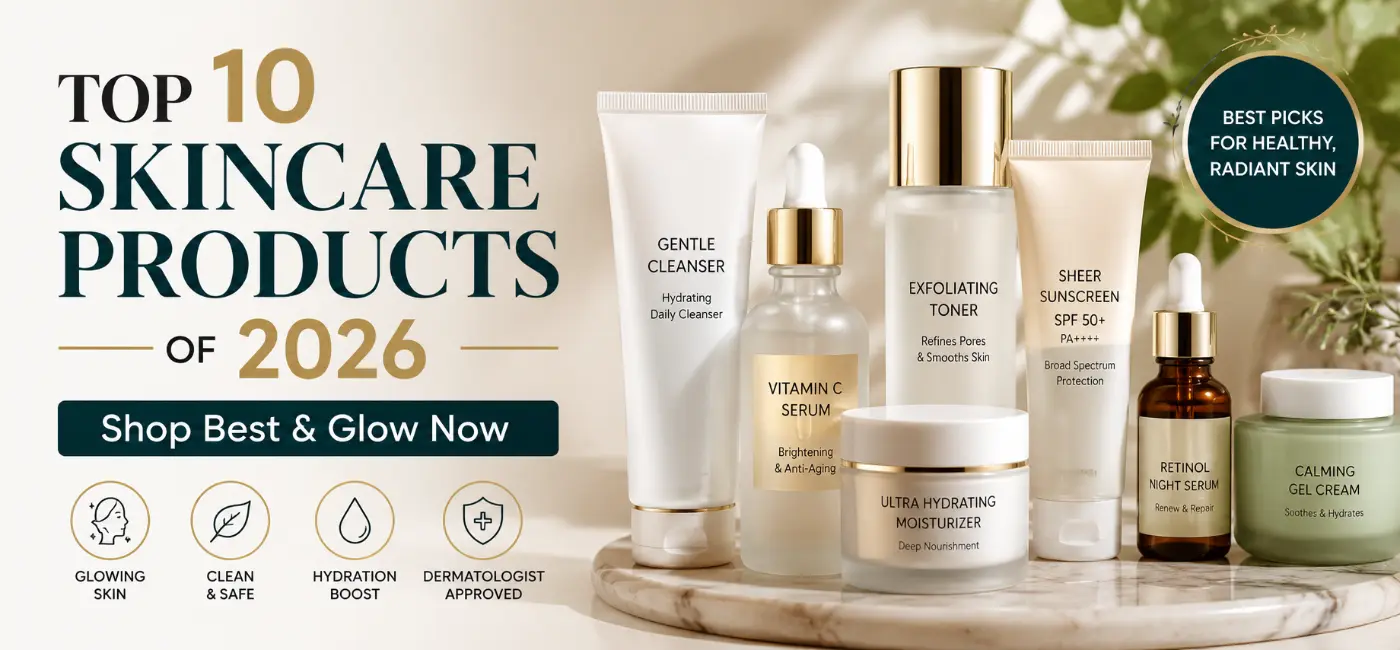
Skincare in 2026 isn’t about doing more – it’s about doing the right things, in the right order, for skin that actually holds up over time. After a few years of 10-step routines, viral “skin cycling” schedules, and one aggressive active after another, dermatologists and formulators have landed in roughly the same place: fewer products, better-chosen ingredients, and a focus on protecting skin’s long-term function instead of chasing an overnight transformation.
That shift is good news if your bathroom shelf is already crowded. Below are the 10 skincare product categories that actually deserve a spot in a 2026 routine, what to look for in each, and how to build them into a routine you’ll realistically stick with.
Why 2026 Skincare Looks Different
The biggest change this year isn’t a single miracle ingredient – it’s a mindset shift. Dermatologists are increasingly talking about skin longevity rather than “anti-aging,” which means the goal is protecting skin’s barrier and cellular function over decades, not just smoothing today’s fine lines. In practice, that shows up as:
- Barrier repair over aggressive resurfacing. Ceramide- and lipid-rich formulas are replacing heavy, irritating routines built around stacking multiple strong actives at once.
- Gentler exfoliation. PHAs and low-strength lactic acid are edging out harsh physical scrubs and daily strong acids.
- Smarter delivery of proven actives. Encapsulated retinol, stabilized vitamin C, and next-generation peptides are formulated to work with less irritation, not more.
- Personalization. Skin-analysis apps and AI-guided routines are helping people match ingredients to their actual skin, instead of copying a stranger’s 12-step routine.
- Simpler, values-driven formulas. Vegan, fragrance-free, and allergen-conscious formulations have moved from niche to mainstream shelf staples.
None of this means the classics are out. It means the classics – SPF, vitamin C, a good moisturizer – are being formulated smarter, and the products that round out a routine are chosen for a clear job, not just because they went viral.
How We Chose These 10 Essentials
Each category below made the list because it meets three criteria: it’s backed by dermatology-level evidence (not just trend cycles), it addresses a distinct skin function (protection, hydration, barrier repair, renewal, or brightening), and it fits into a realistic daily routine without requiring a dozen other products to work. Categories that are more hype than substance in 2026 – think single-ingredient “miracle” serums with no supporting research – didn’t make the cut.
The Top 10 Skincare Products Your 2026 Routine Needs
1.Balancing Moisturiser
A creamy moisturiser with significant and lasting effects on skin hydration and smoothness. Formulated with plant phospholipids, organic seed butter and oils, organic herbs and flowers to maintain healthy skin.
What to Look For:When shopping for a moisturizer of this kind, look for a formula centered around plant phospholipids, organic seed butters, and oils that provide deep, long-lasting hydration to lock moisture into the skin. Additionally, ensure the product contains organic herbs and botanical floral extracts to nourish the skin naturally, maintain its smooth texture, and promote a healthy, radiant complexion. Choosing products free from harsh chemicals and rich in pure, natural ingredients is essential for maintaining long-term skin health and resilience.
2.Hydrating Serum
Designed for normal and combination skin,Hydrating Serum is a hydrating infusion with organic olive leaf, calendula and marshmallow.
What to Look For:When shopping for a hydrating serum tailored for normal and combination skin, look for a lightweight infusion containing soothing and balancing botanical ingredients like organic olive leaf, calendula, and marshmallow. These key components work together to deliver targeted hydration, calm the skin, and maintain an even, healthy moisture balance without feeling heavy or greasy.
3.A Retinoid - or a Retinol Alternative That Fits Your Skin
Retinol is still the most-studied ingredient for texture, fine lines, and cell turnover, but 2026 is the year retinol alternatives earned real credibility. Bakuchiol, a plant-derived compound, has shown results comparable to retinol in clinical comparisons with less irritation, making it a common recommendation for sensitive skin, rosacea-prone skin, or anyone who’s pregnant or breastfeeding (retinoids should be avoided in both cases – always confirm with your own doctor). Peptides and azelaic acid are the other two alternatives dermatologists reach for most often.
What to look for: encapsulated or time-released retinol for lower irritation, or 0.5–1% bakuchiol if you’re retinol-sensitive. How to use it: start 2–3 nights a week and build up tolerance; always follow with sunscreen the next morning, since cell turnover ingredients increase sun sensitivity.
4. Niacinamide Serum
Niacinamide (vitamin B3) has become close to a routine non-negotiable because it does several jobs at once: it supports the skin barrier’s own ceramide production, helps balance oil production, calms redness, and gradually fades dark spots. It’s also one of the easier actives to layer, since it plays well with almost everything else on this list.
What to look for: a 2–5% concentration, which is enough to see barrier and tone benefits without the tingling some people get at higher percentages. How to use it: morning or night, right after cleansing and before heavier creams – it works well under both vitamin C and moisturizer.
5. Multi-Weight Hyaluronic Acid Serum
Plain hyaluronic acid pulls water into the skin’s surface, but “multi-weight” formulas – blending different molecular sizes of HA – go a step further by hydrating at multiple depths of the skin instead of just the top layer. This is one of the clearest examples of the 2026 shift from “more actives” to “smarter versions of proven actives.”
What to look for: labels that specify multiple HA weights or “multi-molecular weight hyaluronic acid,” ideally paired with humectants like glycerin. How to use it: apply to slightly damp skin, then seal it in with moisturizer – HA needs moisture in the air or a layer on top to work properly, or it can actually pull moisture out of dry skin.
6. Ceramide-Rich Moisturizer (Barrier Repair Cream)
This is the product most responsible for the 2026 shift toward barrier health. After a few years of “slugging” (sealing in moisture with a thick occlusive layer), the focus has moved toward moisturizers that actively rebuild the barrier with ceramides and lipids, rather than just trapping in whatever’s underneath.
What to look for: ceramides listed in the first half of the ingredient list, often alongside cholesterol and fatty acids – the three lipids that mimic the skin’s own barrier composition. How to use it: as the last step of both your AM and PM routines (before sunscreen in the morning), especially if skin feels tight, flaky, or reactive to other products.
7. Gentle Chemical Exfoliant (PHA or Low-Strength Lactic Acid)
Harsh scrubs and daily strong-acid routines are on their way out. Polyhydroxy acids (PHAs) and lower-strength lactic acid deliver the same smoothing, brightening benefit as older exfoliants – removing built-up dead skin cells so other products absorb better – without the micro-tears or irritation that come with physical scrubs or daily glycolic acid.
What to look for: PHA (gluconolactone or lactobionic acid) for sensitive or barrier-compromised skin, or 5–10% lactic acid for more resilient skin. How to use it: 2–3 nights a week, never on the same night as retinol, and always followed by moisturizer.
8. Peptide Treatment or Serum
Next-generation peptides are one of the clearer “quiet workhorse” trends of 2026 – chains of amino acids that signal skin to support its own collagen and elastin production. They’re gentler than retinol, layer easily with almost anything, and are a good daily option for people who want visible firmness support without an adjustment period.
What to look for: named peptide complexes (like copper peptides or signal peptides) rather than vague “peptide complex” claims with no specifics. How to use it: morning or night, after water-based serums and before moisturizer – peptides are typically well tolerated alongside niacinamide, hyaluronic acid, and bakuchiol.
9. Caffeine or Peptide-Based Eye Cream
The eye area has thinner skin and shows fatigue, puffiness, and fine lines faster than the rest of the face, which is why targeted eye care remains a consistent request in 2026 skincare consultations. Caffeine helps temporarily de-puff by constricting blood vessels, while peptides and niacinamide address fine lines and dark circles over time.
What to look for: caffeine for puffiness, peptides and niacinamide for longer-term firmness and brightening, and a fragrance-free formula since eye-area skin is more reactive. How to use it: pat gently with the ring finger – never rub – both morning and night, after serums and before heavier face cream.
10. pH-Balanced Gentle Cleanser
It’s easy to overlook the cleanser in favor of flashier serums, but a cleanser that strips the skin barrier undermines everything layered on top of it. The 2026 standard is a low-lather, pH-balanced formula that removes makeup, sunscreen, and daily buildup without leaving skin feeling tight.
What to look for: “pH-balanced” or “gentle” on the label, sulfate-free where possible, and cream, gel, or milk textures rather than foaming formulas for dry or sensitive skin. How to use it: morning and night as the first step of your routine; double-cleanse (oil-based cleanser first) in the evening if you wear sunscreen or makeup.
Quick-Reference Comparison Table
| Product Type | Key Ingredients to Look For | Best For | AM / PM |
|---|---|---|---|
| Hydrating Serum | Stabilized ascorbic acid derivatives, ferulic acid | Dullness, uneven tone, hydration | AM |
| Balancing Moisturiser | Zinc oxide, titanium dioxide, broad-spectrum filters | Daily protection, balanced hydration, every skin type | AM (final step) |
| Retinoid / Bakuchiol | Encapsulated retinol or 0.5–1% bakuchiol | Texture, fine lines, uneven skin | PM |
| Niacinamide Serum | 2–5% niacinamide | Oiliness, redness, barrier support | AM or PM |
| Hyaluronic Acid Serum | Multi-weight hyaluronic acid, glycerin | Dehydration, plumpness | AM or PM |
| Ceramide Moisturizer | Ceramides, cholesterol, fatty acids | Dryness, barrier repair, sensitivity | AM & PM |
| Gentle Exfoliant | PHA, low-strength lactic acid | Dullness, rough texture | PM, 2–3×/week |
| Peptide Serum | Copper peptides or signal peptides | Firmness, elasticity | AM or PM |
| Eye Cream | Caffeine, peptides, niacinamide | Puffiness, dark circles, fine lines | AM & PM |
| Gentle Cleanser | pH-balanced, sulfate-free ingredients | Cleansing, all skin types | AM & PM |
How to Layer Your Skincare Routine
Getting the order right matters as much as the products themselves – apply from thinnest to thickest texture, and let each layer absorb for a minute before the next.
Morning:
- Gentle cleanser
- Hydrating Serum
- Niacinamide or hyaluronic acid serum
- Eye cream
- Ceramide moisturizer
- Balancing Moisturiser
Evening:
- Double cleanse (if wearing sunscreen/makeup)
- Gentle exfoliant (2–3x/week only) or retinoid/bakuchiol – never both the same night
- Niacinamide or peptide serum
- Eye cream
- Ceramide moisturizer
What to Use Based on Your Skin Type
| Skin Type | Prioritize | Go Easy On |
|---|---|---|
| Oily / Acne-Prone | Niacinamide, PHA exfoliant, lightweight gel moisturizer | Heavy occlusive creams |
| Dry | Ceramide moisturizer, multi-weight HA, cream cleanser | Foaming cleansers, daily strong acids |
| Sensitive / Reactive | Bakuchiol over retinol, PHA over AHA/BHA, fragrance-free everything | Multiple actives introduced at once |
| Combination | Niacinamide (balances both zones), lightweight HA | One-size-fits-all heavy moisturizer |
| Mature | Retinoid or bakuchiol, peptides, ceramide-rich moisturizer, daily SPF | Skipping moisturizer under actives |
5 Skincare Mistakes to Leave Behind in 2026
- Skipping SPF on cloudy or indoor-heavy days. UVA rays penetrate clouds and windows; daily SPF isn’t optional.
- Introducing three new actives at once. Add one new product at a time so you can actually tell what’s working – or what’s irritating you.
- Mixing retinol and strong acids the same night. This is the fastest way to compromise the barrier you’re trying to protect.
- Using hyaluronic acid without sealing it in. On its own in dry air, HA can pull moisture from deeper skin layers instead of the air.
- Judging a product after three days. Most actives – retinoids, vitamin C, peptides – need 4–12 weeks of consistent use before results show.
FAQs
What is the best skincare routine for 2026?
The best skincare routine starts with a gentle cleanser, followed by a hydrating serum and moisturiser In the morning, finish with broad-spectrum SPF, while evening routines can include targeted ingredients like retinoids or peptides based on your skin’s needs.
Do I need a 10-step skincare routine to see results?
No. Most of the visible benefit comes from consistent use of a handful of well-chosen products – cleanser, one or two actives, moisturizer, and SPF. Extra steps only help if they’re solving a specific problem; otherwise they add cost and irritation risk without added benefit.
Is retinol still the best anti-aging ingredient in 2026?
Retinol remains the most-studied option for texture and fine lines, but it’s no longer the only credible choice. Bakuchiol has shown comparable results in clinical comparisons with less irritation, making it a common alternative for sensitive skin, rosacea, or pregnancy (always confirm with your doctor).
What order should I apply my skincare products?
Thinnest to thickest: cleanser, then water-based serums (vitamin C, niacinamide, hyaluronic acid), then treatment actives (retinoid or exfoliant), then eye cream, then moisturizer, then SPF in the morning.
How much sunscreen should I use on my face daily?
The American Academy of Dermatology recommends enough sunscreen to fully cover all exposed skin – roughly a nickel-sized amount for the face alone – reapplied every two hours when outdoors.
Can I use vitamin C and retinol in the same routine?
Yes, but generally not layered in the same application – most dermatologists recommend vitamin C in the morning and retinol (or bakuchiol) at night to avoid destabilizing either ingredient and to reduce irritation.
What's the difference between "skin longevity" and "anti-aging"?
Anti-aging typically targets visible signs like wrinkles as they appear. Skin longevity is a broader, preventive approach focused on protecting the skin barrier and its long-term function – the shift most dermatologists point to as defining 2026 skincare.
Key Takeaways
- Focus on Skin Longevity: Prioritize skin barrier repair and long-term health over aggressive, multi-active anti-aging routines.
- Streamline Your Essentials: Use a core routine featuring broad-spectrum sunscreen, a retinoid or bakuchiol, niacinamide, multi-weight hyaluronic acid, a ceramide moisturizer, a gentle exfoliant, peptides, eye cream, and a pH-balanced cleanser to cover all essential functions without complication.
- Protect Your Skin Daily: Never skip your daily broad-spectrum sun protection—it remains the single highest-impact product for maintaining skin health.
- Introduce Actives Slowly: Add new products one at a time, allowing 4 to 12 weeks to properly evaluate results before making changes.
- Personalize Your Regimen: Match active ingredients specifically to your unique skin type rather than copying a routine built for someone else.
Conclusion
Building a great skincare routine in 2026 isn’t about owning every product on the shelf – it’s about choosing the right ten, in the right order, and giving them time to work. Start with sunscreen and a barrier-repairing moisturizer if you only add two things this month, then layer in the rest as your skin adjusts.
Ready to build your routine? Shop Vigrovia’s full skin care collection to find barrier-friendly cleansers, serums, and moisturizers formulated for exactly this kind of routine Shop Skin Care →

Ahetesam Sabugar
Ahetesam Sabugar is the founder of Vigrovia. He researches and writes guides on skincare, supplements, fitness recovery and home-gym gear. He isn't a doctor, so every article is built from published studies, ingredient labels and trusted sources like the NIH and Cleveland Clinic, and is updated when new research comes out.
More articles by Ahetesam →