On this page
Hair Care Routine Steps: Simple Daily Guide (2026)
Quick answer: A good hair care routine is simple: wash with a gentle shampoo suited to your scalp, condition every time, use a treatment or mask weekly and protect hair from heat. Match products to your hair type instead of chasing silicone-heavy quick fixes.
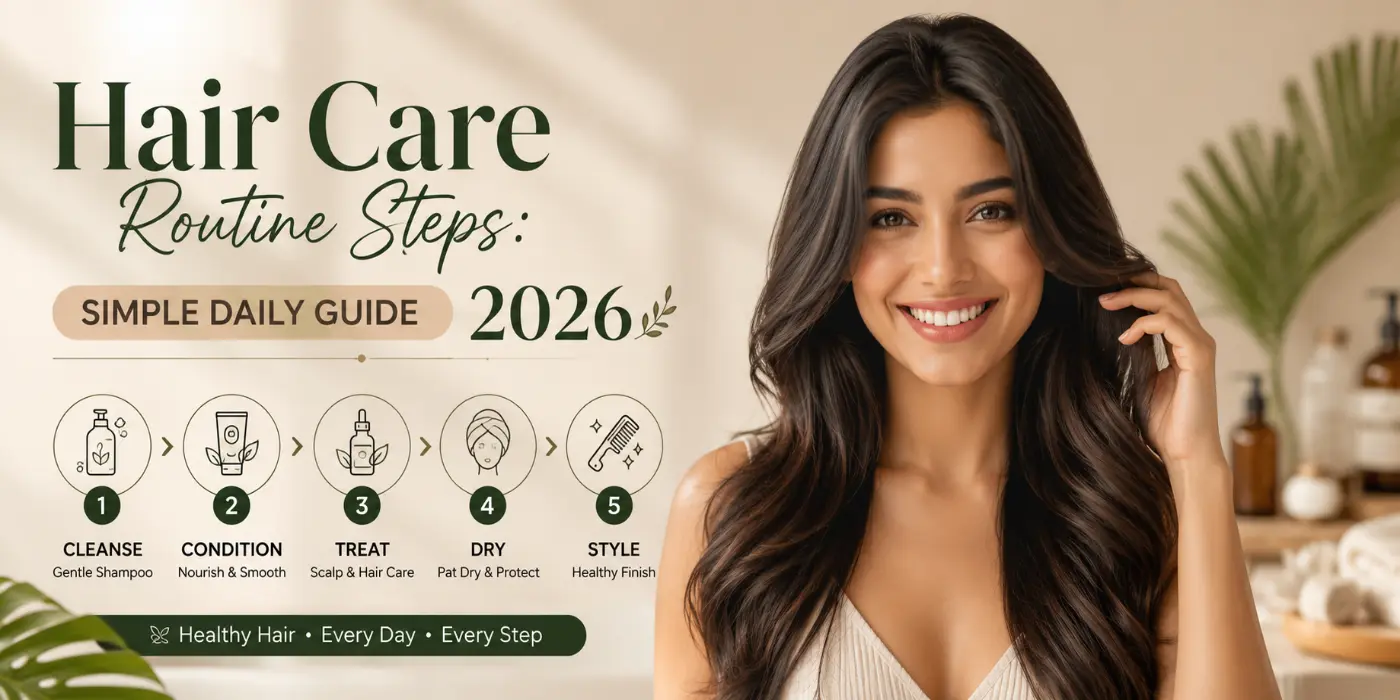
Frizzy by noon, flat by evening, and somehow both dry and greasy at the same time? You’re not alone – bad hair days have quietly become the default for millions of people juggling hard water, heat tools, and back-to-back busy schedules. But instead of chasing another expensive “miracle” product, a growing number of people in 2026 are doing something smarter: following a clean, simple hair care routine that actually works with their hair instead of against it.
Here’s the catch with most hair “fixes”: they mask the problem instead of solving it. Silicone-heavy serums coat your strands for a few hours, then leave them heavier and duller than before. Genuinely healthy hair comes from somewhere quieter – a consistent routine that cleanses gently, feeds your strands, and protects them from the daily damage you barely notice.
So this guide walks through five simple hair care routine steps – what each one actually does, why the order matters, and easy ways to fit them into your day. Short on time, growing your hair out, or just tired of frizz? Give these steps a few weeks and most people see a real difference.
What Makes a Good Hair Care Routine?
A “good routine” isn’t about owning ten products — it’s about doing a few key things consistently and in the right order. When it comes to healthy hair specifically, the best routines share three traits: they clean the scalp without stripping it, they replace the moisture and nutrients your strands lose every day, and they protect your hair from heat, friction, and environmental damage.
That distinction matters, because more products don’t mean better results. A true hair care routine does at least one of these things well at each step: it balances your scalp so oil and buildup stay in check, it strengthens and hydrates the hair shaft so strands resist breakage, or it shields your hair from the heat and stress that cause split ends. The five steps below were chosen because each one earns its place with a clear, practical job to do.
Why Your Hair Type and Scalp Matter
Your hair and your scalp share the same foundation: healthy follicles and a balanced scalp environment. When your scalp is dry, oily, or irritated, it directly affects how your hair grows, how quickly it gets greasy, and how much it breaks. Over time this creates a frustrating loop – you over-wash to fight oil, which dries the scalp, which produces even more oil, leaving your hair more damaged than before.
At a deeper level, every strand of hair is built from protein and sealed by a protective outer layer called the cuticle. Harsh shampoos, excessive heat, and rough drying all lift and damage that cuticle, so your hair loses moisture and looks dull and frizzy. That’s why the best approach isn’t just “wash more” — it’s caring for your scalp and your strands together. The right routine does exactly that: it keeps the scalp balanced while sealing and protecting the hair you already have.
The Science Behind Healthy Hair in 2026
The reason a simple routine works comes down to a few well-understood basics. Cleansing removes the oil, sweat, and product buildup that clog follicles, but doing it too aggressively strips the natural oils your scalp needs – which is why a gentle, well-formulated shampoo matters more than a harsh one. Balance, not force, keeps the scalp healthy.
At the same time, conditioning and treatment target the strand itself. Conditioners smooth and reseal the cuticle so your hair holds moisture and reflects light, while targeted treatments deliver protein and hydration deeper into damaged areas. Finally, how you dry and style your hair decides how much of that hard work survives the day – patting instead of rubbing, and using heat protection, prevents the breakage and split ends that undo everything else. In short, the science points to the same conclusion as everyday experience: gentle cleansing, real nourishment, and smart protection beat any single “miracle” product.
The 5 Hair Care Routine Steps
Every step on this list made the cut for the same three reasons: it does a specific job, it works with your hair instead of overloading it, and it fits into normal life without fuss. Follow them in order, and if you’re short on time, focus first on the steps that target your biggest problem.
1. Cleanse – Start with a Gentle Shampoo
Cleansing is the foundation of every hair care routine, because a clean, balanced scalp is where healthy hair begins. A gentle, sulfate-free shampoo lifts away oil, sweat, and buildup without stripping the natural oils your scalp needs to stay healthy. Because it works on the root cause – scalp balance – it’s the single best starting point if your hair gets greasy fast or feels weighed down.
For best results, focus the shampoo on your scalp rather than the lengths, and avoid washing every single day unless your hair truly needs it. Massaging gently with your fingertips also boosts circulation to the follicles, which supports healthier growth over time. Explore clean, scalp-friendly options in our shampoo range.
2. Condition – Nourish and Smooth
Conditioner replaces the moisture your hair loses during cleansing and reseals the cuticle so strands stay smooth, soft, and frizz-free. It’s essential for anyone with dry, coarse, or color-treated hair, and it makes detangling far easier while reducing breakage. Skipping this step is one of the most common reasons hair looks dull and tangles easily.
Apply it from mid-length to ends – not the scalp – and give it a minute or two to absorb before rinsing. Because it works on the strand rather than just coating the surface, a good conditioner leaves your hair genuinely softer, not just slippery.
3. Treat – Care for Your Scalp and Strands
Treatments are the step most people skip, yet they’re where damaged hair actually gets repaired. A weekly hair mask, scalp serum, or protein treatment delivers concentrated nourishment deeper than everyday conditioner can reach. Unlike a quick rinse-out product, treatments target specific concerns – dryness, breakage, thinning, or an unbalanced scalp – at their source.
Once or twice a week is plenty for most people, so this step is easy to fit in without adding time to your daily wash. Stick with a repairing hair treatment consistently and, within a few weeks, most people notice stronger, shinier hair and a calmer, healthier scalp.
4. Dry – Pat Dry and Protect
How you dry your hair affects its health just as much as how you wash it. Wet hair is at its most fragile, so rough towel-drying and high heat are two of the biggest causes of frizz, breakage, and split ends. Gently patting or squeezing your hair with a soft microfiber towel protects the cuticle and keeps strands intact.
If you use a blow dryer, always apply a heat protectant first and keep the temperature moderate. This one habit – protecting your hair from unnecessary heat and friction – quietly preserves all the work your cleansing, conditioning, and treatment steps put in.
5. Style – Finish for Healthy Hair
Styling is the final step, and done right, it protects your hair while it makes it look good. A lightweight serum or leave-in helps seal in moisture, tame frizz, and add shine without weighing your hair down. The goal is a healthy finish – hair that looks polished but still moves and feels natural.
Whenever you use hot tools, keep the heat moderate and never skip heat protection. A good styling gel also helps you hold a look without stiffness, while styles that don’t pull tightly on your scalp prevent stress on the follicles – keeping both your hair and roots healthier in the long run.
How to Build Your Daily Hair Care Routine
Start simple: nail the basics before adding extras. Consistent gentle cleansing, conditioning, and heat protection will do more for your hair than a shelf full of specialty products. A common winning routine is cleansing and conditioning on wash days, a treatment once or twice a week, and heat protection every single time you style. Consistency matters far more than doing everything at once.
Here’s a simple framework you can adapt to your own hair:
- Wash days: Gently cleanse the scalp, then condition mid-length to ends for smooth, hydrated strands.
- Once or twice a week: Add a mask, scalp serum, or protein treatment to repair and strengthen.
- Every time you dry: Pat with a microfiber towel and apply heat protection before any hot tools.
- Daily finish: A light serum or leave-in to seal in moisture, control frizz, and add shine.
Pair these with the fundamentals — enough water, a protein-rich diet, gentle handling, and a silk or satin pillowcase — and the effect compounds. A hair care routine works best as part of a lifestyle, not as an occasional rescue mission. For a wider view, browse our full hair care collection for daily essentials.
What to Look for When Buying Hair Care Products
Quality decides results. The hair care market is crowded with heavy, filler-packed products that coat your strands and clog your scalp without truly nourishing anything. Choose products that are sulfate-free, free from harsh additives, and clearly labeled for your hair type and concern so you know exactly what you’re putting on your hair.
Keep these buying tips in mind:
- Sulfate-free formulas: Gentle cleansers clean without stripping your scalp’s natural oils.
- Clean label: Avoid unnecessary silicones, drying alcohols, and artificial fragrances that build up over time.
- Right for your hair type: Match products to your needs — hydration for dry hair, lightweight formulas for fine hair, repair for damaged strands.
- Transparent ingredients: Reputable brands clearly list what’s inside and what each ingredient does.
At Vigrovia, every hair care product is clean-label and quality-checked for the US market — shop the full Body & Hair Care range here.
Common Hair Care Routine Mistakes
The most common mistakes are washing on the wrong schedule for your hair type, rubbing or brushing hair while it is wet, and using hot tools every day. The American Academy of Dermatology lists most of these in its healthy-hair tips, and each one slowly strips moisture and weakens strands.
- Shampooing the full length. Put shampoo on your scalp; the rinse cleans the ends without drying them out.
- Washing too often or too rarely. Oily, straight hair may need a daily wash, while dry or curly hair can go longer, but the AAD still suggests at least once every 2 to 3 weeks.
- Skipping conditioner. Conditioner moisturizes and detangles. Use it on the ends if your hair is fine, and on the full length if it is dry or curly.
- Brushing or rubbing wet hair. Wet hair breaks easily. Use a wide-tooth comb and wrap your hair in a towel or T-shirt instead of rubbing.
- High heat every day. Limit blow-drying and flat irons, use a heat protectant, and keep tools on a low to medium setting.
- Tight styles every day. Constant pulling from tight ponytails and braids can lead to hair loss over time.
- Too many products. Layering many styling products causes buildup that weighs hair down; a short routine works better.
Frequently Asked Questions
How often should I wash my hair?
For most hair types, two to three times a week is ideal. Over-washing strips natural oils and can trigger more oiliness, while the right frequency keeps your scalp balanced and your hair healthy.
In what order should I apply hair care products?
Follow the five steps in order: cleanse, condition, treat, dry, and style. This sequence lets each product do its job and helps the next one work more effectively.
How long does it take to see healthier hair?
Most people notice smoother, shinier hair within a few weeks of following a consistent routine. Deeper improvements in strength and scalp health build gradually over one to three months.
Do I really need a heat protectant?
Yes – if you use any hot tools, heat protection is essential. It shields the cuticle from damage and is one of the simplest ways to prevent breakage and split ends.
Can a simple routine really make a difference?
Absolutely. Consistency with a few well-chosen steps almost always beats an overloaded routine, giving you healthier, more manageable hair without the extra time or cost.
Do I need a 10-step hair care routine?
No. Three or four steps (cleanse, condition, protect, and a treatment when your hair needs it) cover most hair types. Piling on more products usually means more buildup on the scalp, not healthier hair.
Can tight hairstyles cause hair loss?
Yes. The American Academy of Dermatology warns that the constant pulling of tight ponytails, braids and updos can lead to hair loss, and that advanced traction hair loss may not grow back. Loosen styles and change where you tie your hair.
Final Thoughts
Healthy, good-looking hair doesn’t come from a single miracle product – it comes from caring for your hair the right way, every day. A good hair care routine works with your hair: gentle cleansing keeps your scalp balanced, conditioning and treatments refill what daily wear depletes, and smart drying and styling protect the strands you already have.
Start with the basics – cleanse, condition, and always protect from heat – stay consistent for a few weeks, and build from there. Small, steady habits beat dramatic overhauls every time. Ready to begin? Explore clean, quality-checked options in the Vigrovia hair care collection and start seeing the difference this week.

Ahetesam Sabugar
Ahetesam Sabugar is the founder of Vigrovia. He researches and writes guides on skincare, supplements, fitness recovery and home-gym gear. He isn't a doctor, so every article is built from published studies, ingredient labels and trusted sources like the NIH and Cleveland Clinic, and is updated when new research comes out.
More articles by Ahetesam →