On this page
The Science of Superfoods: Marketing Hype vs. Nutritional Reality
Quick answer: “Superfood” is a marketing term, not a scientific category. Berries, greens and seeds are nutritious, but no single food outweighs an overall balanced diet. A varied “super plate” of whole foods does more for your health than any one trendy ingredient.
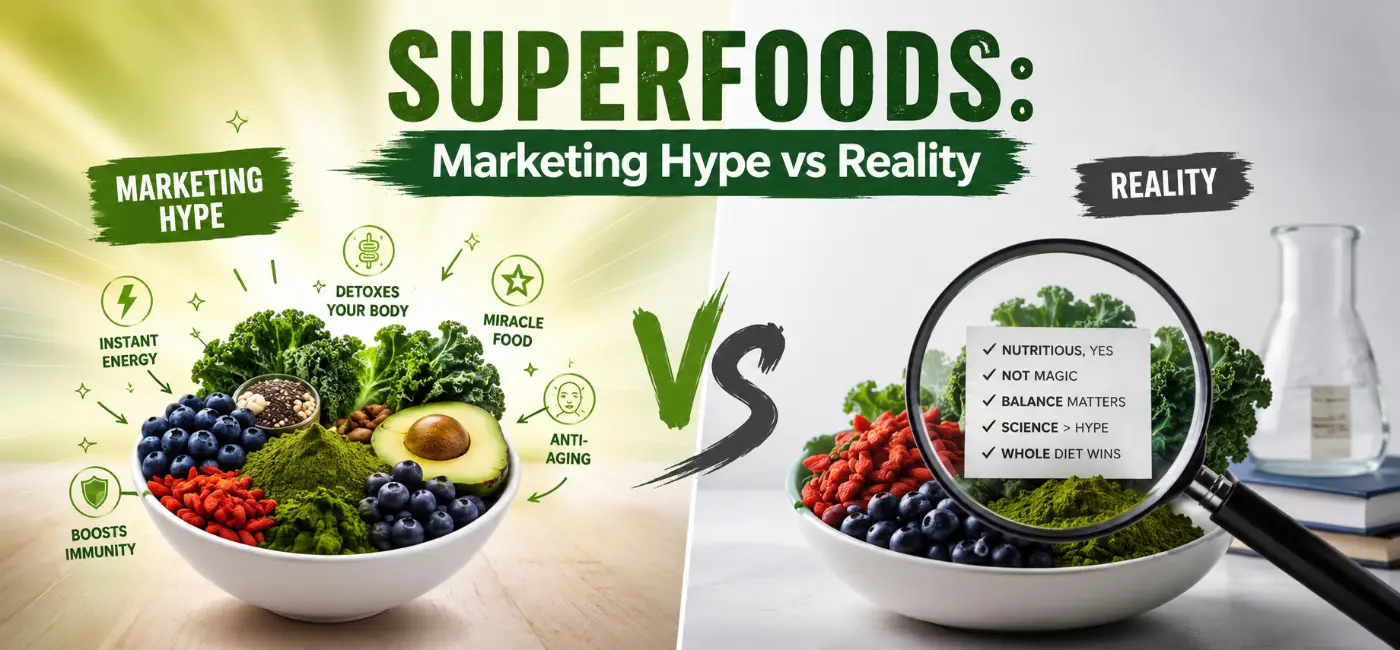
Walk down the aisle of any modern grocery store, and you will find an array of products boldly boasting the title of “superfood.” From vibrant açai powders and ancient grains to standard bags of frozen berries, the label has become synonymous with optimal health, vitality, and disease prevention. For consumers navigating the complexities of modern health, the allure is undeniable: the promise that incorporating a handful of specific, elite ingredients can counteract the stresses of a modern lifestyle. If you want to jumpstart this lifestyle with a pure kick of micronutrients, incorporating a clean, concentrated blend like our Berry Radical Antioxidant into your breakfast can easily build early interest in daily wellness habits.
However, behind the eye-catching packaging and viral wellness trends lies a sophisticated intersection of corporate marketing, consumer psychology, and evolving nutritional science. The fundamental question remains: Does the science of superfoods validate these extraordinary health claims, or is the concept merely a brilliant marketing strategy designed to command premium prices? To understand the value of what we put on our plates, we must separate commercial hype from clinical evidence, exploring how whole-food nutrition truly impacts human physiology.
The Historical Origins of a Marketing Buzzword
Contrary to popular belief, the term “superfood” did not originate in a medical research laboratory or a university nutrition department. Its Inception was entirely commercial.
The earliest recorded corporate deployment of the term occurred during World War I, orchestrated by the United Fruit Company. Faced with the logistical challenge of promoting its massive imports of bananas, the company launched an aggressive marketing campaign. They published informational pamphlets highlighting the banana’s unmatched practicality—it was cheap, nutritious, easily digested, and naturally sealed in a germ-proof package.
The strategy achieved monumental success when physicians in medical journals published findings suggesting that a banana-heavy diet could help manage conditions like celiac disease and diabetes. The American Medical Association endorsed the inclusion of bananas in children’s diets, cementing the fruit’s status as a health emblem. The public embraced the craze, providing a historic blueprint for how food industries could leverage scientific curiosity to drive unprecedented sales.
In the twenty-first century, digital media has accelerated this cycle. What once took decades now occurs in weeks. A single cell-culture study evaluating the antioxidant capacity of an exotic berry can be amplified by popular media, transformed into a viral wellness trend, and converted into a billion-dollar product line before robust human clinical trials are ever conducted. Many people latch onto these trends blindly without screening what they put in their bodies, which makes it vital to recognize the clear difference between clean vs regular supplements to protect yourself from predatory corporate manufacturing. According to market research, global consumers routinely demonstrate a willingness to pay premium prices for items bearing health claims, transforming the superfood phenomenon into a massive global industry.
For years, high-ORAC foods like dark chocolate, blueberries, and spices were heavily marketed as ultimate disease fighters. However, in 2012, the USDA took the significant step of removing its public ORAC database. According to the USDA’s official statement the data, which was largely generated in vitro (in test tubes), did not accurately reflect how these compounds behave within the complex biological systems of the human body. The relationship between an antioxidant’s behavior in a laboratory setting and its therapeutic effects in human tissue is influenced by complex processes of digestion, bioavailability, and metabolic breakdown.
Therefore, the true scientific value of these foods does not stem from an isolated laboratory score, but from their overall micronutrient density and the complex synergy of their naturally occurring phytochemicals (plant compounds like polyphenols, flavonoids, and anthocyanins). Missing out on these core compounds can manifest physically, so it is helpful to look out for common signs of nutrient deficiency when evaluating your current health state.
Fad vs. Fact: Analyzing Popular "Superfoods" Through a Clinical Lens
To better understand the true value of these ingredients, it is helpful to look closely at the actual clinical data surrounding some of the most prominent items on modern superfood lists.
| Food Category | Promoted Health Benefit | Clinical Evidence & Nutritional Reality |
|---|---|---|
| 🫐 Blueberries | Cognitive protection & cardiovascular health | Rich in anthocyanins. Regular consumption is strongly associated with improved endothelial function, healthier blood pressure regulation, and modest cognitive preservation in aging populations. |
| 🌱 Chia Seeds | Heart health & digestive support | An excellent plant-based source of ALA omega-3 fatty acids and soluble fiber. They effectively support glycemic control and digestive regularity. |
| 🐟 Wild Salmon | Brain health & inflammation reduction | Highly concentrated in EPA and DHA omega-3 fatty acids. Large-scale studies consistently show reduced systemic inflammation and a lower risk of cardiovascular disease. |
| 🥬 Kale & Cruciferous Vegetables | Cellular protection & detoxification | Packed with glucosinolates, which convert into bioactive isothiocyanates. These compounds demonstrate well-established mechanisms for regulating inflammatory pathways in laboratory research. |
The Downside of the Superfood Hype
While encouraging the consumption of nutrient-dense options is positive, the commercial hyper-focus on specific “superfoods” carries distinct psychological and behavioral downsides.
The "Halo Effect" and Dietary Hyper-Focus
In nutritional psychology, the “health halo effect” occurs when an individual overestimates the healthfulness of an item based on a single claim. When consumers view a specific food as an all-powerful health solution, it can lead to two problematic behaviors:
Dietary Monotony: Individuals may over-consume a narrow selection of hyped items (e.g., eating excessive amounts of kale or taking concentrated green tea extracts) while neglecting a broader, more diverse selection of fruits and vegetables.
Compensatory Eating: Believing that consuming a morning smoothie filled with superfood powders grants immunity from poor dietary choices, leading individuals to justify highly processed meals later in the day.
No single food can undo the physiological impact of a diet high in ultra-processed foods, refined sugars, and sedentary habits. Health is built through cumulative dietary choices, not isolated instances of nutrient consumption.
Environmental and Economic Impacts
The sudden global demand for specific superfoods also carries real-world consequences for the regions that produce them. Global demand for quinoa, for example, roughly tripled its price between 2006 and 2013. Fears that the boom priced out local families turned out to be largely wrong, as research on Peruvian households found that quinoa growers gained the most, but the boom-and-bust cycle left farmers exposed when prices fell again. Similarly, the expanding cultivation of avocados and açai has raised concerns regarding local water depletion, mono-cropping, and deforestation in vulnerable ecosystems.
Shifting the Paradigm: From a "Superfood" to a "Super Plate"
To cultivate lasting health, consumers should shift their focus from finding individual miracle foods to building a balanced, diverse dietary pattern. Human physiology thrives on dietary biodiversity—the consumption of a wide variety of plant and animal species.
Institutional frameworks, such as the Harvard Healthy Eating Plate, provide an excellent, evidence-based blueprint for this approach. Rather than tracking exotic ingredients, focus on filling your plate using these balanced proportions:
Half the Plate: Vegetables and fruits, emphasizing a wide variety of colors. The distinct pigments in produce represent different classes of phytochemicals, ensuring a broad spectrum of cellular support. If you want to dive deeper into how these ingredients fundamentally benefit your body, explore our comprehensive breakdown on the top 10 superfoods for a healthy diet (to restructure your grocery list.
One-Quarter of the Plate: Whole, intact grains such as oats, brown rice, barley, and quinoa. These provide sustained energy and intact dietary fiber.
One-Quarter of the Plate: Healthy protein sources, prioritizing lean poultry, wild-caught fish, legumes, and nuts, while limiting heavily processed meats.
Healthy Plant Oils: Utilizing high-quality extra virgin olive oil, avocado oil, or nut oils in moderation, while minimizing trans fats and hydrogenated oils.
Key Takeaways
No Legal Status: The term “superfood” is a marketing construct rather than a regulated scientific classification.
Synergy Over Isolation: The health benefits of whole foods come from the natural interaction of their vitamins, minerals, and phytochemicals, not from isolated compounds.
Local Alternatives Exist: Budget-friendly everyday items like cabbage, frozen berries, spinach, and flaxseeds provide comparable health benefits to expensive, exotic imports.
Patterns Matter Most: Lasting wellness is driven by an overall dietary pattern characterized by variety and balance, rather than the occasional consumption of hyped ingredients.
Frequently Asked Questions
Q1: Is "Superfood" an actual scientific term?
Not at all! In the scientific and medical world, the word “superfood” doesn’t exist. It is a brilliant marketing buzzword created to make exotic ingredients sound magical—and to justify a higher price tag.
Q2: Do I need to buy expensive, exotic foods to stay healthy?
Absolutely not. While acai berries and quinoa are healthy, everyday staples like spinach, garlic, oats, and apples offer the exact same (or better) nutritional benefits at a fraction of the cost.
Q3: Can a superfood fix a poor, everyday diet?
Wishful thinking, but no. Adding a spoonful of chia seeds to your morning routine won’t undo the damage of a day packed with highly processed fast food. Consistency in your overall diet beats any single “miracle” ingredient every time.
Q4: Are powdered superfoods and green supplements worth the money?
Rarely. The processing required to turn whole foods into powders often strips away essential fibers and sensitive vitamins. Eating whole, fresh foods will always give your body superior nutrient absorption compared to a scoop of expensive powder.
Q5: How can I spot marketing hype vs. nutritional reality on food labels?
Ignore the flashy claims on the front (like “Immunity Boosting!” or “Fat Burning!”). Flip the package over and look at the Ingredients List. If the first few ingredients are sugar, artificial flavors, or preservatives, it’s not a superfood—it’s junk food in a health costume.
Q6: What is the ultimate, science-backed "Superfood" strategy?
“Eat the Rainbow.” Instead of obsessing over one exotic berry, focus on filling your plate with a variety of colorful, locally sourced fruits, vegetables, whole grains, and lean proteins. Diversity is the real nutritional superpower.
Conclusion
The science of superfoods teaches us that while certain foods are exceptionally dense in vital nutrients, there is no single magical ingredient capable of guaranteeing optimal health. Real wellness isn’t found in expensive powders or exotic berries sourced from distant regions; it is built through the daily habit of choosing a colorful, balanced variety of whole foods.
Instead of chasing the next overhyped wellness trend, focus your energy on building a diverse, vibrant plate filled with real, minimally processed ingredients. If you want an all-in-one nutritional insurance policy to perfectly complement your balanced plate, shop our organic ultrafoods protein powder today to easily hit your macronutrient goals. Your health – and your wallet – will thank you.
Ready to transform your nutrition? Skip the supplement aisle this week. Head straight to the fresh produce or frozen section, choose three new colorful vegetables, and start building your own health-focused plate today.

Ahetesam Sabugar
Ahetesam Sabugar is the founder of Vigrovia. He researches and writes guides on skincare, supplements, fitness recovery and home-gym gear. He isn't a doctor, so every article is built from published studies, ingredient labels and trusted sources like the NIH and Cleveland Clinic, and is updated when new research comes out.
More articles by Ahetesam →