
On this page
Why Omega-3 Supplements Fail & How to Fix Them
Quick answer: Omega-3 supplements often fail because of low-quality or oxidized oil, the wrong form, too little EPA and DHA per dose, or taking them without a meal that contains fat. A fresh, tested product taken with food fixes most of these problems.
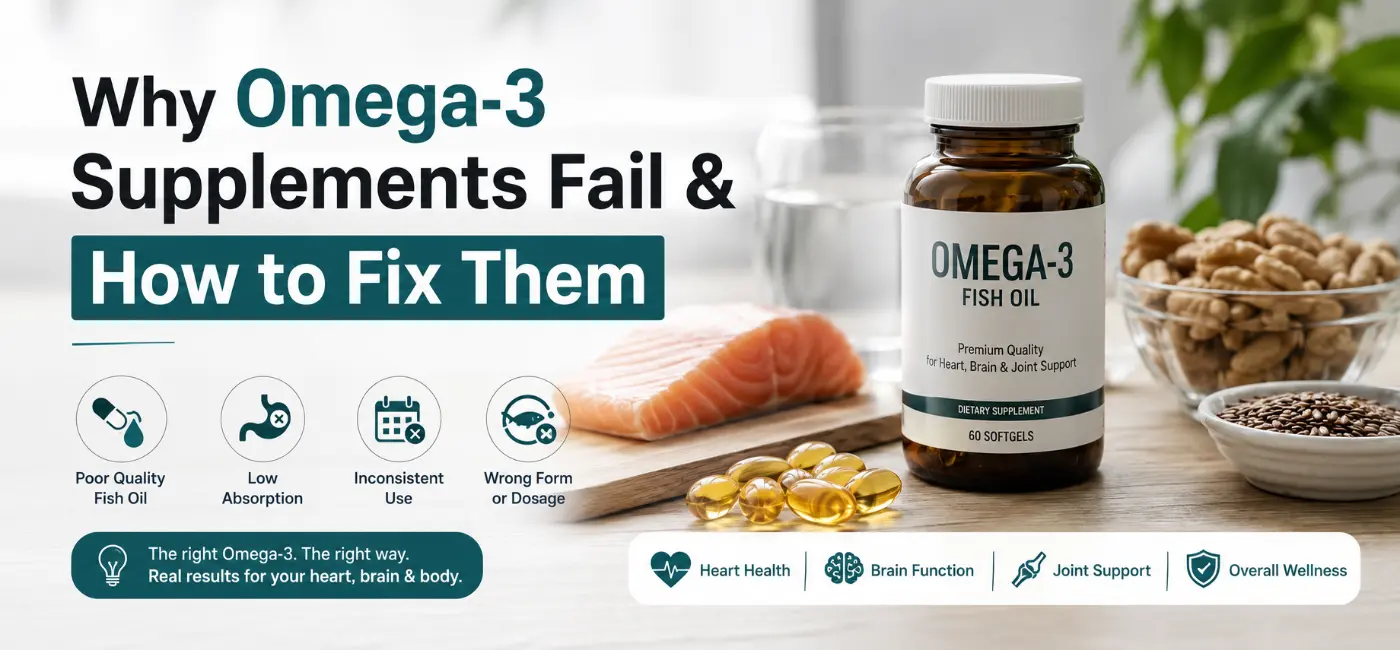
You bought the high-potency fish oil bottle, placed it neatly next to your morning coffee, and swallowed your daily softgel religiously for months. Yet, your skin remains dry, your joints still ache on rainy mornings, and that persistent brain fog refuses to lift.
You are left wondering: If omega-3s are supposed to be a miracle nutrient, why aren’t mine working?
The truth is, taking an omega-3 supplement does not guarantee your body is actually utilizing it. Millions of people consume fish oil daily without experiencing any clinical benefit. Between poor supplement manufacturing, incorrect chemical structures, missing dietary co-factors, and rampant omega-6 imbalances, your expensive supplement might be passing right through you.
Understanding Omega-3s: The Essential Triad
Omega-3 fatty acids are a class of polyunsaturated fatty acids (PUFAs) that your body cannot manufacture on its own. They are fundamental building blocks of every cell membrane in your body, dictating membrane fluidity, receptor function, and cellular signaling.
The omega-3 family consists of three primary players:
EPA (Eicosapentaenoic Acid): A marine-derived fatty acid primarily known for combating systemic inflammation, supporting cardiovascular health, and regulating mood pathways.
DHA (Docosahexaenoic Acid): A marine-derived fatty acid that heavily concentrates in the brain, retina, and nervous tissue, vital for cognitive performance and visual acuity.
ALA (Alpha-Linolenic Acid): A plant-based omega-3 found in flaxseeds, chia seeds, and walnuts. ALA serves as a precursor, but the human body’s conversion rate of ALA into active EPA and DHA is exceptionally low (often under 5%).
When your intake of bioavailable EPA and DHA is chronically low, your body begins to experience systemic functional deficits. As you evaluate your overall nutritional intake to close these gaps, understanding foundational health safeguards is critical, which you can learn more about in Best daily supplements.
5 Signs You Are Still Deficient Despite Supplementation
Even if you take supplements, you may still display signs of a cellular omega-3 deficit if your body isn’t absorbing or utilizing them properly:
Persistent Skin Irritation and Barrier Breakdown: Without adequate EPA and DHA, skin lipids lose their water-retaining capacity. This manifests as chronic flakiness, rough patches, or an unexpected spike in adult acne driven by unmitigated skin inflammation. To protect your skin barrier and ensure optimal radiance, it helps to incorporate Best Skincare Products alongside your daily routine.
Cognitive Fatigue and Low Mood: DHA and EPA maintain neuronal membrane integrity and possess neuroprotective properties. Low status frequently correlates with mental sluggishness, anxiety, and depressive symptoms. If mental clarity is your primary struggle, adding a targeted daily formula like Brain supplement can help support cognitive performance and uplift your focus.
Dry Eye Syndrome: Omega-3 fatty acids regulate meibomian gland function, which produces the lipid layer of your tears. Deficiency leads to rapid tear evaporation, grittiness, and burning eyes.
Joint Stiffness and Arthritic Pain: Omega-3s suppress pro-inflammatory eicosanoids and cytokines that attack joint cartilage. Lingering joint discomfort indicates that systemic inflammation is overriding your supplement dose. When managing widespread body discomfort or sluggishness, pairing your routine with Energy foods provides a synergistic way to revitalize your vitality.
Hair Thinning and Brittle Textures: Just as skin relies on essential fats, hair follicles require steady nourishment to maintain density, structural strength, and moisture retention. Ensuring proper nourishment for your strands is essential, and you can explore expert advice via Hair care tips to combat brittleness.
Why Your Omega-3 Supplements Are Failing: 6 Hidden Culprits
| Reason Supplements Fail | Why It Blocks Results | How to Fix It |
|---|---|---|
| 1. Oxidized / Rancid Oils | Damaged or rancid fish oils generate free radicals, increasing oxidative stress instead of reducing inflammation. | Buy third-party tested brands (IFOS Certified) and check for a fresh, non-fishy smell. |
| 2. Cheap Chemical Form | Ethyl Ester (EE) forms have lower bioavailability and need significantly more dietary fat for proper absorption. | Choose Natural Triglyceride (TG) or Re-Esterified Triglyceride (rTG) forms. |
| 3. Mismatched EPA/DHA Ratios | Using a formula with the wrong EPA/DHA balance may reduce benefits for inflammation, mood, or cognitive health. | Match the EPA/DHA ratio to your health goal (e.g., 60%+ EPA for mood and joint support). |
| 4. Lack of Dietary Fat Co-factors | Omega-3 is fat-soluble. Taking it on an empty stomach greatly reduces lymphatic absorption. | Always take your Omega-3 with a meal containing healthy fats. For example, take your AG Omega3 capsule with lunch or dinner. |
| 5. High Omega-6 Overload | Excess seed oils create an inflammatory imbalance that can overpower the benefits of Omega-3 supplementation. | Reduce soybean, corn, and sunflower oils while increasing marine-based Omega-3 intake. |
| 6. Poor ALA Conversion | Relying only on flax or chia seeds assumes your body will efficiently convert ALA into EPA and DHA, which is often very limited. | Supplement directly with marine-sourced or algae-derived EPA and DHA. |
How to Test and Verify Your Omega-3 Status

If you want to stop guessing, you need clinical verification. Routine metabolic panels rarely test fatty acid status, but specialized functional medicine diagnostics are available.
The Omega-3 Index Test: This blood test measures the exact percentage of EPA and DHA present in red blood cell membranes relative to total fatty acids. An optimal Omega-3 Index falls above 8%, while anything under 4% places you at high risk for deficiency-related complications.
Red Blood Cell (RBC) Fatty Acid Profile: This provides a comprehensive look at your long-term dietary fat intake over the past 90 to 120 days, capturing shifts in your cellular membrane composition rather than temporary post-meal blood spikes.
An Actionable Protocol to Make Your Omega-3s Work
Transforming your supplement routine from a waste of money into a powerful health asset requires a strategic reset:
Audit Your Supplement Label: Inspect your bottle for the words Triglyceride form or rTG. Avoid cheap generic “fish oil concentrate” labels that hide low-grade ethyl esters. For comprehensive foundational wellness support, consider pairing your essentials with Daily supplement to cover all nutritional bases.
Prioritize Purity and Oxidation Standards: Look for certifications from the International Fish Oil Standards (IFOS) or Friend of the Sea to ensure the product is free from heavy metals and has a low Totox (total oxidation) value.
Time It With Your Fattiest Meal: Take your softgels alongside avocado, eggs, full-fat yogurt, or a meal cooked in olive oil. The presence of dietary fat triggers bile acid secretion and micelle formation, dramatically increasing lymphatic uptake.
Explore Algal Oil Alternatives: If you follow a plant-based lifestyle or experience fish-burps from marine oils, high-purity algal oil provides direct, preformed EPA and DHA without the need for inefficient ALA conversion.
Frequently Asked Questions
1. Why do most omega-3 supplements fail?
Most fail due to poor oil quality, rancidity, incorrect dosage, or taking them without enough dietary fat for proper absorption.
2. How can I tell if my fish oil is rancid?
If your supplement smells excessively fishy, tastes bitter, or causes unpleasant “fish burps” long after taking it, it is likely oxidized and rancid.
3. When is the best time to take omega-3?
Always take omega-3 capsules with your largest meal of the day, specifically one containing healthy fats to maximize bioavailability.
4. How much EPA and DHA do I actually need?
A standard daily dose for general health is a combined minimum of 500 mg of EPA and DHA, though individual needs vary based on your health goals.
5. Do triglyceride or ethyl ester forms matter?
Yes. Triglyceride-form omega-3s are absorbed much faster and more efficiently by the body compared to synthetic ethyl ester forms.
6. How should I store my omega-3 supplements?
Store them in a cool, dark, and dry place – or keep them in the refrigerator – to prevent heat, light, and oxygen from destroying the delicate oils.
Conclusion
If your omega-3 supplements haven’t delivered the radiant skin, sharp focus, and pain-free joints you expected, the problem isn’t the nutrient – it’s the delivery mechanism, product quality, or biological environment. By upgrading to a high-potency triglyceride or algal formula, pairing your dose with healthy fats, and addressing underlying dietary imbalances, you can finally unlock the true physiological power of essential fatty acids. To ensure your cellular health and internal defenses are operating at their absolute peak, integrating a powerhouse antioxidant like Quercetin supplement can further amplify your wellness results.
Ready to optimize your health? Check your current supplement labels today, swap out low-grade ethyl esters for clinical-grade triglycerides, and schedule an Omega-3 Index test to track your cellular transformation.

Ahetesam Sabugar
Ahetesam Sabugar is the founder of Vigrovia. He researches and writes guides on skincare, supplements, fitness recovery and home-gym gear. He isn't a doctor, so every article is built from published studies, ingredient labels and trusted sources like the NIH and Cleveland Clinic, and is updated when new research comes out.
More articles by Ahetesam →