On this page
Gel for Curly Hair: The Complete Guide by Hold, Porosity & Curl Type
The right curly hair gel depends on three things working together, not one:
- Curl type (2A–2C wavy, 3A–3B curly, 3C–4C coily) determines how much hold and moisture you need
- Porosity (how easily your hair absorbs and holds moisture) determines how heavy a formula you can handle
- Climate and humidity determine how much frizz-resistance your hold layer needs to provide
Fine, low-porosity, wavy hair generally does best with a lightweight, low-glycerin gel. Coarse, high-porosity, tightly coiled hair usually needs a heavier, humectant-rich, stronger-hold formula. Get those three variables right, and almost any well-formulated gel will work.
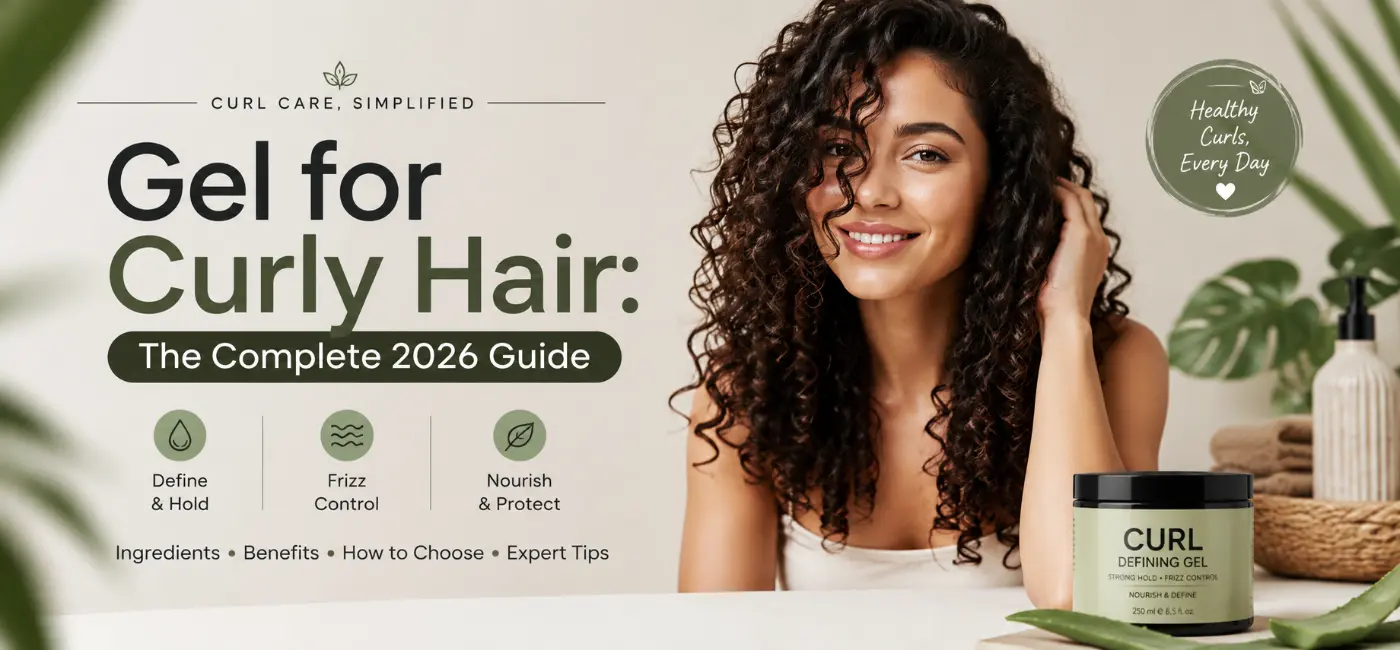
If you have five different types of “best curly hair gels” and still can’t find the one you like, you were not doing something wrong! You were asking the wrong question. There is no best gel for curly hair. There is only the best gel for your curl pattern, your porosity, and the climate you live in.
That’s the gap in most gel round-ups: they hand you a list of ten products and call it a day. This guide does something different. It breaks down the actual science of what makes a gel hold, what makes it feel heavy, how curl type and porosity change the answer, and exactly how to apply it so you get definition without crunch. By the end, you’ll be able to read any gel’s ingredient list and know in seconds whether it’s right for your hair – no more expensive guessing.
Choosing Gel by Curl Type, Porosity, and Climate
Every curly hair gel guide talks about curl type. Almost none of them combine it with porosity and climate – which is exactly why so many people follow a “best for curly hair” list and still end up disappointed, often because they never got a personalized hair consultation that actually accounts for all three factors together.
By Curl Type
Type 2 (wavy): Waves are the most slippery type of curl to hold. Too much oil, butter, or heavy humectants in a gel will weigh them down and make them go flat by noon. Go for lighter, almost liquid, gels or whipped creams and gels.
Type 3 (curly): This range covers everything from loose spirals to tight, springy corkscrews. 3A hair usually wants a medium-hold, moisture-forward gel. 3B–3C hair generally needs a stronger hold and more conditioning agents to fight frizz without losing shape.
Type 4 (coily): Coily and kinky patterns shrink the most and dry out the fastest, since natural scalp oil has the longest, most twisted path to travel down the strand – which is also why many people with coily hair pair their styling routine with hair growth vitamins to support strength and moisture retention from the root out. These curl types typically need the richest, moisture-heaviest gels combined with a strong hold to keep shrinkage-prone coils elongated and defined.
By Porosity
Porosity – how easily your hair’s cuticle lets moisture in and out – changes how a gel behaves on your specific strands even within the same curl type.
Low porosity: The cuticle lies flat and resists moisture, so heavy gels tend to sit on top of the hair rather than absorb, leading to buildup and a greasy look. Lightweight, water-based gels applied to soaking-wet hair work best.
Medium porosity: The most forgiving porosity type. Most gels formulated for “all curl types” are really built with medium porosity hair in mind.
High porosity: The cuticle is raised or damaged, so moisture escapes quickly and hair frizzes fast – and since raised cuticles can sometimes point to nutrient deficiencies affecting hair health it’s worth looking beyond your styling routine if the damage persists. High-porosity hair generally benefits from richer, protein-and-humectant-containing gels and often needs a sealing layer (an oil or cream) applied before the gel to slow moisture loss.
By Climate
A gel that performs beautifully in a dry climate can turn to frizz within an hour in humid weather, and vice versa. In consistently humid regions, prioritize gels with a higher concentration of film-forming polymers, since these create a more effective barrier against airborne moisture. In dry climates, prioritize humectants like glycerin and aloe, which pull moisture into the hair instead of sealing it out.
Hold Levels Explained: Light, Medium, Strong, and Hard
“Hold” isn’t just about how stiff the gel feels straight out of the bottle – it’s about whether your curls still have shape and minimal frizz at the end of the day, not just right after styling. A gel that gives a rock-hard cast but frizzes out within three hours doesn’t actually have strong hold; it just has a strong initial set.
Most curly gels also form what’s known as a gel cast – a temporary hardened layer that locks curls in place while drying. You’re meant to break, or “scrunch out,” this cast once hair is completely dry, which reveals soft, bouncy curls underneath rather than the stiff, crunchy texture people associate with old-school gels.
| Hold Level | Feel While Wet | Best For | Watch Out For |
|---|---|---|---|
| Light | Thin, almost liquid | Type 2 waves, fine/low-density hair | Minimal humidity resistance |
| Medium | Gel-like but flexible | Type 3A curls, most "everyday" wear | Can underperform in high humidity |
| Strong (Flexible) | Thicker gel, noticeable cast | Type 3B–3C curls, humid climates | Needs a full scrunch-out to avoid stiffness |
| Hard | Very thick, forms a firm crunchy cast | Type 3C–4C coils, multi-day styles, extreme humidity | Can flake if over-applied or under-emulsified |
The Ingredient Science: What Actually Creates Hold vs. Weight
This information is usually omitted form most gel guides, and knowing it is the difference between having some guesswork every time you buy a gel or being able to know exactly how each ingredient contributes to final result. The key is to understand that any given gel is made of ingredients that fall roughly into 3 categories
Film-forming polymers provide hold, ingredients like PVP, VP/VA copolymer or polyquaternium polymers (Polyquaternium-69) are what give the curl its shape and hold it there while the product is not on your hair anymore, the higher they are on the ingredient list, the stronger and more lasting the hold is.
Humectants create moisture – and, in excess, weight. Glycerin, aloe vera, and honey pull water into the hair shaft, which boosts shine and softness. This is fantastic in dry climates and for high-porosity or coily hair that struggles to retain moisture. In humid climates or on fine, low-porosity hair, though, too much glycerin can actually attract excess ambient moisture and cause frizz or limpness – a phenomenon sometimes called “glycerin overload.”
Fatty alcohols, oils, and butters add conditioning – and weight. Ingredients like cetyl alcohol, shea butter, and various plant oils soften hair and reduce frizz, but they’re also the main reason a gel can feel heavy. Fewer of these, and the lower they sit on the ingredient list, the lighter the finished gel will feel once it’s dry.
What to generally avoid: drying alcohols (alcohol denat, isopropyl alcohol, SD alcohol), which dehydrate curls and encourage frizz; and heavy silicones without a regular clarifying wash, which build up over time and mute curl definition. Many curl-focused formulas are also made without sulfates, since sulfates strip the natural oils curly and coily hair depends on to stay defined.
Popular Curly Hair Gels, Organized by Hold Level
Rather than a single “best of” list, here’s how well-known curly hair gels on the market generally sort by hold level – useful as a reference point once you know which hold level your hair actually needs.
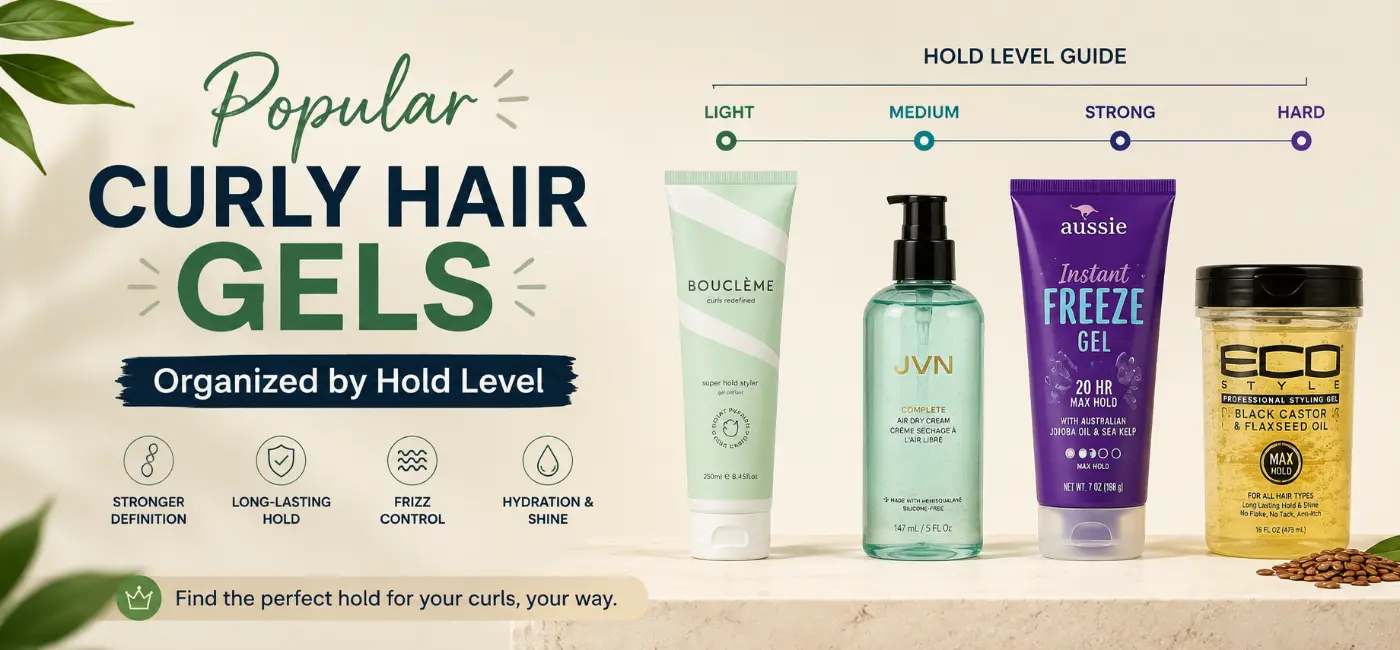
| Hold Level | Examples on the Market | Typical Texture |
|---|---|---|
| Light / Lightweight | Curl creams marketed as "weightless" or "featherlight" | Watery to lotion-like |
| Medium / Flexible | Most mainstream "curl defining" gels | Clear, medium-thick gel |
| Strong Hold | Gels marketed as "climate control," "flash freeze," or "shine gel" | Thick, clear gel with visible cast |
| Hard Hold | Flaxseed-based gels and gels marketed as "extra firm" or "rock hard" | Very thick, forms a strong crunchy cast |
Use this as a starting map, not a final answer – the same “strong hold” label can behave differently depending on where its polymers and humectants fall on the ingredient list, which is why reading the label still matters more than the marketing claim on the front of the bottle.
How to Apply Gel for Maximum Definition (No Crunch)
- Start on soaking-wet hair, not damp hair. The wetter your hair, the more evenly the gel distributes and the better it performs – this is one of the most consistently underestimated steps.
- Rake or “praying hands” the gel through. Smooth the gel between your palms, then run it through sections from ends to roots, or rake it through with your fingers, distributing it evenly rather than dumping it in one spot.
- Scrunch upward toward the scalp. This is what encourages your natural curl clumps to form, rather than just coating individual strands.
- Hands off until fully dry. Touching, separating, or restyling wet or damp curls disrupts the clumping pattern and is one of the biggest causes of frizz.
- Air dry or diffuse on low heat. If diffusing, move slowly and keep the heat low to avoid disrupting the pattern you just created.
- Scrunch out the cast once hair is 100% dry. Cup your palms gently around sections of hair and scrunch to break the crunchy cast, revealing soft, defined curls underneath.
Common Mistakes That Ruin Curl Definition
- Applying gel to towel-dried or air-dried hair instead of soaking wet hair, which prevents even distribution
- Using a heavy, humectant-rich gel in high humidity, which invites frizz instead of preventing it
- Rubbing hair dry with a terrycloth towel instead of gently squeezing with a microfiber towel or cotton T-shirt, which roughens the cuticle
- Touching or restyling curls before they’re fully dry, which breaks up clumps and creates frizz
- Skipping a leave-in or curl cream base, especially for high-porosity or coily hair that needs extra moisture underneath the gel’s hold layer
- Never clarifying – a mistake that, along with several other easy-to-fix habits covered in hair care tips lets gel, cream, and oil residue build up over time and gradually mutes curl definition
Troubleshooting Common Gel Problems
| Problem | Likely Cause | Fix |
|---|---|---|
| Gel flakes once dry | Too much product, or under-emulsified between palms. | Use less, rake more thoroughly, or switch to a formula lower in film-forming polymers. |
| Cast never softens / scrunches out | Hair dried before the cast fully set, or the gel is too heavy for your hair porosity. | Let hair dry completely before scrunching, or try a lighter-weight gel formula. |
| Curls fall flat by midday | Hold level is too light for your curl type or climate, or the formula contains too many heavy conditioning ingredients. | Move up to a stronger-hold gel and check where oils and butters appear on the ingredient list. |
| Hair looks greasy or stringy | Too much product for low-porosity or fine hair. | Use a smaller amount and choose a lighter, less humectant-heavy formula. |
| Curls frizz almost immediately in humidity | The gel's polymer content is too low for humid conditions. | Choose a formula with polymers listed higher on the ingredient list, or layer a stronger-hold gel. |
Making Your Style Last: Second-Day Refresh Tips
You don’t need a full wash day to revive curls. A light mist of water, followed by a small amount of gel or a lightweight refresher spray scrunched through dry curls, can bring back definition on day two or three. Sleeping on a satin or silk pillowcase – or loosely piling curls on top of your head before bed (the “pineapple method”) – as part of sleep routine reduces the overnight friction that flattens curls and creates frizz, extending the life of your style between full wash days.
Pairing Gel with the Rest of Your Curl Routine
A gel is only as good as the moisture foundation underneath it. Curls that are already dehydrated will struggle to hold definition no matter how strong the gel’s hold level is. Layering a lightweight leave-in or a hydrating hair oil before your gel – and rotating in a nourishing hair mask on wash day – gives the gel’s polymers something healthy to actually lock in place. If your scalp and strands need a moisture reset before you even reach for styling products, it’s worth building that into your routine first.
Frequently Asked Questions
What's the difference between gel and mousse for curly hair?
Gel relies primarily on film-forming polymers to create a firmer, longer-lasting hold and a gel cast, making it better suited to defined styles that need to survive humidity or a long day. Mousse is typically lighter and airier, giving softer, more natural-looking definition with less risk of weighing down fine or wavy hair, but generally less frizz resistance over a full day.
Should I apply gel to wet or dry hair?
Wet – ideally soaking wet, not just damp. The wetter your hair is when you apply gel, the more evenly it distributes through each strand and the better it activates your natural curl pattern.
Why does my gel make my curls look crunchy?
Crunch is a normal, temporary stage – it’s the gel cast forming as your hair dries. Once hair is completely dry, scrunching the cast with your palms breaks it apart and reveals soft, defined curls. If the crunch never softens, you likely used too much product or the formula is too heavy for your hair’s porosity.
Can I use a strong-hold gel on fine, low-density curly hair?
You can, but use a smaller amount than you would for thicker hair, and rake it through thoroughly rather than applying it in sections. Fine hair is more prone to feeling weighed down, so a gel with fewer heavy conditioning ingredients – even at a strong hold level – will usually perform better than a rich, buttery formula.
How often should I wash curly hair if I use gel daily?
Most curl types do best washing two to three times a week with a gentle, hydrating shampoo rather than daily, since frequent washing strips the natural oils curly hair depends on. Between washes, a light water refresh and a small amount of gel or refresher spray can revive curl definition without a full wash-and-style routine.
Do I need a different gel for humid vs. dry climates?
Not necessarily a different product, but you may need a different hold level. In humid climates, prioritize a gel with a strong concentration of film-forming polymers for better frizz resistance. In dry climates, a gel richer in humectants like glycerin or aloe will help keep curls from feeling brittle or under-hydrated.
Key Takeaways
- There’s no universal “best” curly hair gel – the right choice depends on your curl type, porosity, and climate together, not any one factor alone
- Film-forming polymers create hold; humectants create moisture; fatty alcohols, oils, and butters create conditioning and weight – reading the ingredient list tells you more than the marketing claim on the label
- Apply gel to soaking-wet hair, scrunch upward, and leave curls untouched until fully dry
- The gel cast is supposed to feel crunchy while drying – scrunching it out once hair is completely dry is what reveals soft, defined curls
- Match hold level to your climate and hair type: light hold for fine waves, strong-to-hard hold for thick, coily, or humidity-prone hair
Conclusion
The “best gel for curly hair” was never meant to be a monolithic entity – it was always going to be the gel, which, in relation to your pattern, porosity, and climate, is applied correctly. Understanding what goes on in the ingredient list and why the gel casts the way it does and breaks the way it does demystifies the selection process and subsequent usage.
If your curls still aren’t holding definition even with the right gel, the issue is often what’s happening earlier in the routine – hydration, buildup, or a leave-in base that isn’t doing its job. Explore a complete hair care routine built for every hair type to build out the moisture foundation your gel needs to actually perform.

Ahetesam Sabugar
Ahetesam Sabugar is the founder of Vigrovia. He researches and writes guides on skincare, supplements, fitness recovery and home-gym gear. He isn't a doctor, so every article is built from published studies, ingredient labels and trusted sources like the NIH and Cleveland Clinic, and is updated when new research comes out.
More articles by Ahetesam →