On this page
Best Superfoods for Energy & Stress in 2026 (Backed by Science)
Quick answer: The best superfoods for energy and stress are nutrient-dense foods that steady blood sugar and support your nervous system, such as oats, leafy greens, nuts, seeds, berries and fatty fish. Unlike caffeine or sugar, they give steady energy without a crash.
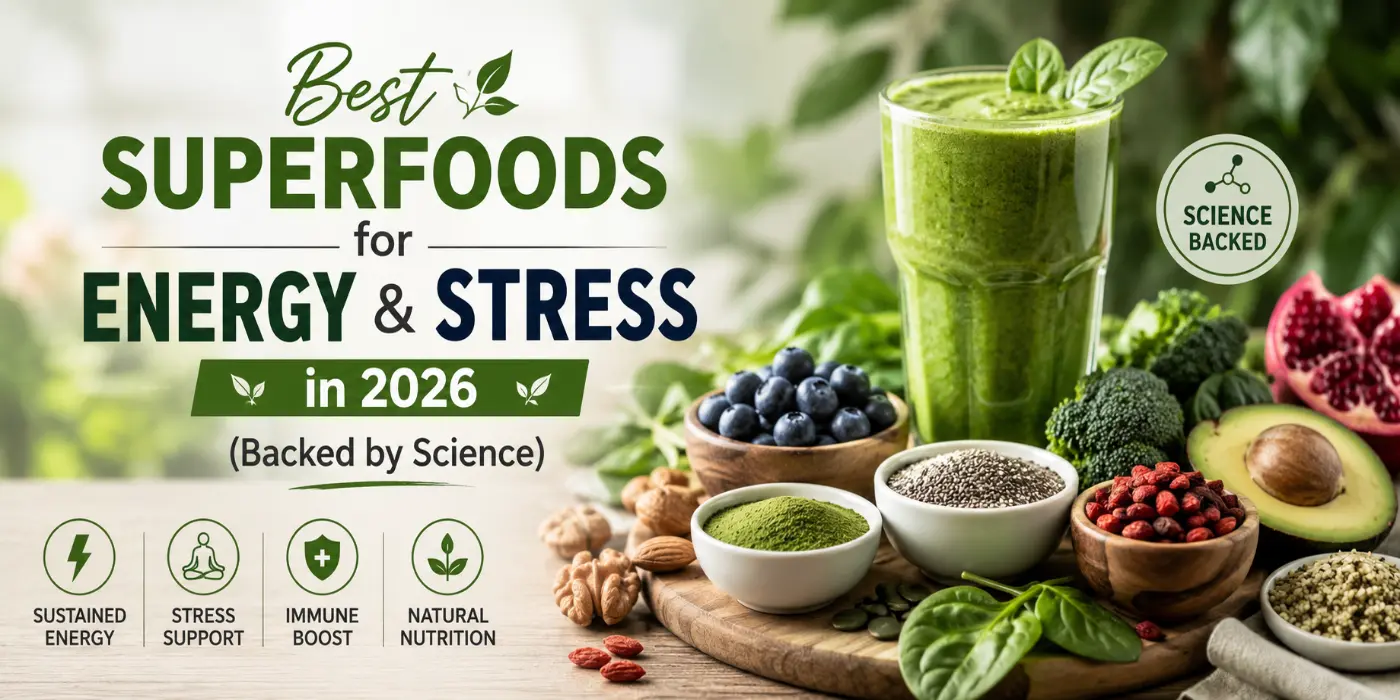
Tired by mid-afternoon, wired at night, and stressed somewhere in between? You’re not alone – that low-hum exhaustion has quietly become the default setting for millions of Americans. But instead of chasing another coffee or a jittery energy drink, a growing number of people in 2026 are doing something smarter: reaching for clean, science-backed superfoods for energy and stress that lift you up and calm you down at the same time.
Here’s the catch with most “energy fixes”: they hide the tiredness instead of fixing it. Caffeine, sugar, and stimulant blends flog your nervous system for an hour, then drop you flat again. Genuine, all-day energy comes from somewhere quieter — feeding the systems that actually make energy inside you, and easing the constant stress that drains your tank without you noticing.
So this guide walks through seven of the best superfoods for the job — what the research really says about each, how they work together, and simple ways to slot them into your day. Busy at work, worn out by the kids, or just craving sharper focus? Give these a few weeks and most people feel a real difference.
What Makes a Food a Superfood for Energy and Stress?
A “superfood” isn’t an official scientific category — it’s a practical term for foods that deliver an unusually high amount of beneficial nutrients relative to their calories. When it comes to energy and stress specifically, the best superfoods share three traits: they help regulate your stress hormones, they supply nutrients your cells need to produce energy, and they protect those cells from inflammation and oxidative damage.
That’s an important distinction, because not every trendy ingredient earns the label. A true superfood for energy and stress does at least one of these things well: it acts as an adaptogen that helps your body cope with stress, it fills a common nutrient gap such as iron, magnesium, or B vitamins, or it improves oxygen and blood flow so your brain and muscles get the fuel they need. The seven foods below were chosen because each one checks at least one of these boxes with real research behind it.
Why Energy and Stress Are Connected
Your energy levels and stress response share the same control system: your adrenal glands and cortisol, your body’s main stress hormone. When you’re chronically stressed, cortisol stays elevated, which drains your energy, disrupts sleep, and makes fatigue worse. Over time this creates a frustrating loop — you feel tired, so you push through with stimulants, which raises stress again, which leaves you even more depleted the next day.
At a deeper level, energy is produced inside tiny structures in your cells called mitochondria. Chronic stress, poor nutrition, and inflammation all reduce how efficiently these mitochondria work, so you generate less usable energy from the food you eat. That’s why the best approach isn’t just “more caffeine” — it’s supporting your body’s stress response and cellular energy together. The right superfoods for energy and stress do exactly that: they help regulate cortisol while supplying the nutrients your cells need to make energy cleanly.
That two-sided effect is what sets real functional foods apart from a quick snack. Adaptogens teach your body to roll with stress, nutrient-dense algae and roots top up what fatigue has drained, and antioxidant-rich foods shield your cells from the everyday wear that leaves you fried. Add decent sleep and enough water, and you’ve got a base that carries you through the whole day.
The Science Behind Superfoods and Stress in 2026
The reason these foods work comes down to a few well-studied biological pathways. Adaptogens such as ashwagandha have been shown in clinical research to lower cortisol, your primary stress hormone, which in turn reduces the fatigue, poor sleep, and mental fog that chronic stress creates. Instead of forcing your system to run harder, they help it return to balance.
At the same time, nutrient-dense superfoods target energy at its source. Iron and B vitamins from foods like spirulina support the red blood cells and enzymes that carry and produce energy, while magnesium from cacao supports relaxation and healthy cortisol regulation. Nitrates in beetroot improve blood flow and oxygen delivery, and omega-3 fats keep the cell membranes in your brain healthy so you stay focused under pressure. In short, the science points to the same conclusion as everyday experience: calming the stress response and feeding your cells the right nutrients is a far more effective path to steady energy than another dose of caffeine.
The 7 Best Superfoods for Energy and Stress
Every food on this list made the cut for the same three reasons: there’s actual research behind it, it works with your body instead of bulldozing it, and it slots into normal life without any fuss. Pick one or two that hit your biggest problem first, then add more once you find your rhythm.
1. Ashwagandha — The Stress-Fighting Adaptogen
Ashwagandha is an adaptogenic herb shown in studies to help lower cortisol and reduce feelings of stress and anxiety, while improving energy and sleep quality. Because it works on the root cause — an overactive stress response — it’s often the single best starting point if stress is what’s draining you. Many people report calmer mornings, steadier moods, and deeper sleep within a few weeks of consistent use.
For best results, take it daily rather than only on stressful days, since adaptogens build their effect over time. An evening dose can be especially helpful because it supports the wind-down before sleep, and better sleep is one of the fastest ways to restore energy. Explore clean ashwagandha blends in our Superfoods collection.
2. Spirulina — Nutrient-Dense Energy
Spirulina is a blue-green algae packed with complete protein, iron, and B vitamins that support red blood cell health and natural energy production. Low iron is one of the most common hidden causes of everyday fatigue, so spirulina is ideal for anyone feeling sluggish, foggy, or run down. It also delivers antioxidants that help protect your cells from stress-related damage.
A teaspoon stirred into a morning smoothie is an easy way to start. Because it’s a whole-food source of nutrients rather than an isolated stimulant, the energy it supports is smooth and sustained. See pure, additive-free options in our Superfoods range.
3. Maca Root — Sustained Stamina
Maca is a Peruvian root traditionally used to boost stamina, mood, and endurance without stimulants. It gives smooth, jitter-free energy — perfect before a workout or a long day of meetings. Unlike caffeine, maca doesn’t spike your heart rate or leave you crashing later; instead it supports your body’s own energy and hormonal balance.
The flavor is mild and malty, so it disappears easily into oatmeal, coffee, or a post-workout shake. Stick with it daily and, within a couple of weeks, most people notice they can push a little harder and their mood sits on a more even keel.
4. Omega-3s — Fuel for Brain and Mood
Omega-3 fatty acids support brain function, focus, and a balanced mood, which directly affects how energized and resilient you feel under pressure. They help reduce inflammation and keep your cell membranes healthy, including the ones in your brain that govern concentration and emotional stability. A well-fed brain simply handles stress better and tires more slowly.
The catch is that many people take omega-3s the wrong way — poor quality, wrong dose, or bad timing — and never feel a benefit. Learn how to fix that in our guide: Why Omega-3 Supplements Fail & How to Fix Them.
5. Green Tea (L-theanine + Caffeine)
Green tea offers gentle caffeine paired with L-theanine, an amino acid that promotes calm, focused alertness. Together they give you the clarity of caffeine without the anxious, jittery edge or the sharp afternoon crash of coffee. That makes green tea a favorite for stress-free productivity and steady concentration.
Trading your second coffee of the day for green tea might be the easiest upgrade here. You keep the focus, pick up a dose of protective antioxidants, and dial back your total caffeine — which your stress hormones will quietly thank you for.
6. Cacao — Natural Mood Lifter
Raw cacao contains magnesium and mood-supporting compounds that ease stress and give a mild, natural lift in energy and outlook. Magnesium is one of the most important minerals for relaxation and healthy cortisol regulation, yet many people don’t get enough of it, which can worsen both tension and tiredness.
A square of good dark chocolate, or a spoonful of raw cacao stirred into a smoothie, is that rare treat that actually does something for you — satisfying, loaded with antioxidants, and gently mood-lifting, minus the sugar crash of the processed stuff.
7. Beetroot — Endurance and Circulation
Beetroot is rich in natural nitrates that support blood flow and oxygen delivery, which naturally improves stamina and reduces that “worn out” feeling, especially during exercise. Better circulation means your muscles and brain get more oxygen, translating into improved endurance, sharper focus, and quicker recovery.
Beet juice or beetroot powder taken before a workout can noticeably improve performance and how energized you feel afterward. It’s a simple, whole-food way to power both your body and your mind.
How to Build Your Daily Superfood Routine
Start simple: pick one superfood and use it consistently for two to three weeks before adding another. This lets you actually notice what’s working and avoids overwhelming your body or your budget. A common winning combo is ashwagandha in the evening for stress and sleep, spirulina or a superfood blend in the morning for energy, and green tea midday instead of a second coffee. Consistency matters far more than taking everything at once.
Here’s a simple daily framework you can adapt to your own schedule:
- Morning: Spirulina or a superfood blend in a smoothie for clean, sustained energy to start the day.
- Pre-workout or midday slump: Beetroot or maca for stamina, plus green tea in place of a second coffee.
- Evening: Ashwagandha to lower cortisol and support deeper, more restorative sleep.
- Anytime treat: A little raw cacao for a magnesium-rich mood lift without the sugar crash.
Pair these with the fundamentals — seven to nine hours of sleep, steady hydration, protein at each meal, and a short daily walk — and the effect compounds. Superfoods work best as part of a lifestyle, not as a substitute for one. For a wider view of what to stock your kitchen with, read our related guide: 10 Superfoods to Beat Fatigue & Boost Daily Energy and browse the full Health & Wellness collection for daily essentials.
What to Look for When Buying Superfoods
Quality decides results. The supplement market is crowded with underdosed, filler-heavy products that never deliver the benefits people hope for. Choose superfoods that are third-party tested, free from fillers and additives, and clearly labeled with their source and dosage so you know exactly what you’re getting.
Keep these buying tips in mind:
- Third-party tested: Independent testing confirms purity and that the label matches what’s inside.
- Clean label: Avoid unnecessary fillers, artificial colors, and sweeteners that dilute the active ingredient.
- Standardized potency: For adaptogens like ashwagandha, look for a clearly stated, effective dose.
- Transparent sourcing: Reputable brands tell you where and how their ingredients are grown and processed.
At Vigrovia, every superfood is clean-label and quality-checked for the US market — shop the full Superfoods collection here.
Frequently Asked Questions
Which superfood is best for stress?
Ashwagandha is the most researched superfood for stress, as it helps lower cortisol while supporting energy and sleep. It’s the best first choice if stress and poor sleep are your biggest concerns.
How long do superfoods take to work?
Most people notice a difference in energy and calm within two to four weeks of daily, consistent use. Adaptogens in particular build their effect gradually, so patience and consistency are key.
Can I take multiple superfoods together?
Yes, but start with one at a time so you know what’s working. Ashwagandha, spirulina, and green tea pair well together and cover both the energy and stress sides of the equation.
Are these superfoods safe daily?
For most healthy adults, yes. If you’re pregnant, nursing, taking medication, or managing a health condition, check with your doctor before starting any new supplement.
Can superfoods replace coffee?
For many people, yes — a combination like maca, spirulina, and green tea can provide steady energy without the crash, letting you cut back on coffee gradually rather than quitting cold turkey.
Final Thoughts
Lasting energy and lower stress don’t come from a quick fix — they come from feeding your body the right nutrients every day. The best superfoods for energy and stress work with your biology: adaptogens calm your stress response, nutrient-dense algae and roots refill what fatigue depletes, and antioxidant-rich foods protect the cells that power you through the day.
Start with one superfood like ashwagandha or spirulina, stay consistent for a few weeks, and build from there. Small, steady habits beat dramatic overhauls every time. Ready to begin? Explore clean, third-party-tested options in the Vigrovia Superfoods collection and start feeling the difference this week.

Ahetesam Sabugar
Ahetesam Sabugar is the founder of Vigrovia. He researches and writes guides on skincare, supplements, fitness recovery and home-gym gear. He isn't a doctor, so every article is built from published studies, ingredient labels and trusted sources like the NIH and Cleveland Clinic, and is updated when new research comes out.
More articles by Ahetesam →